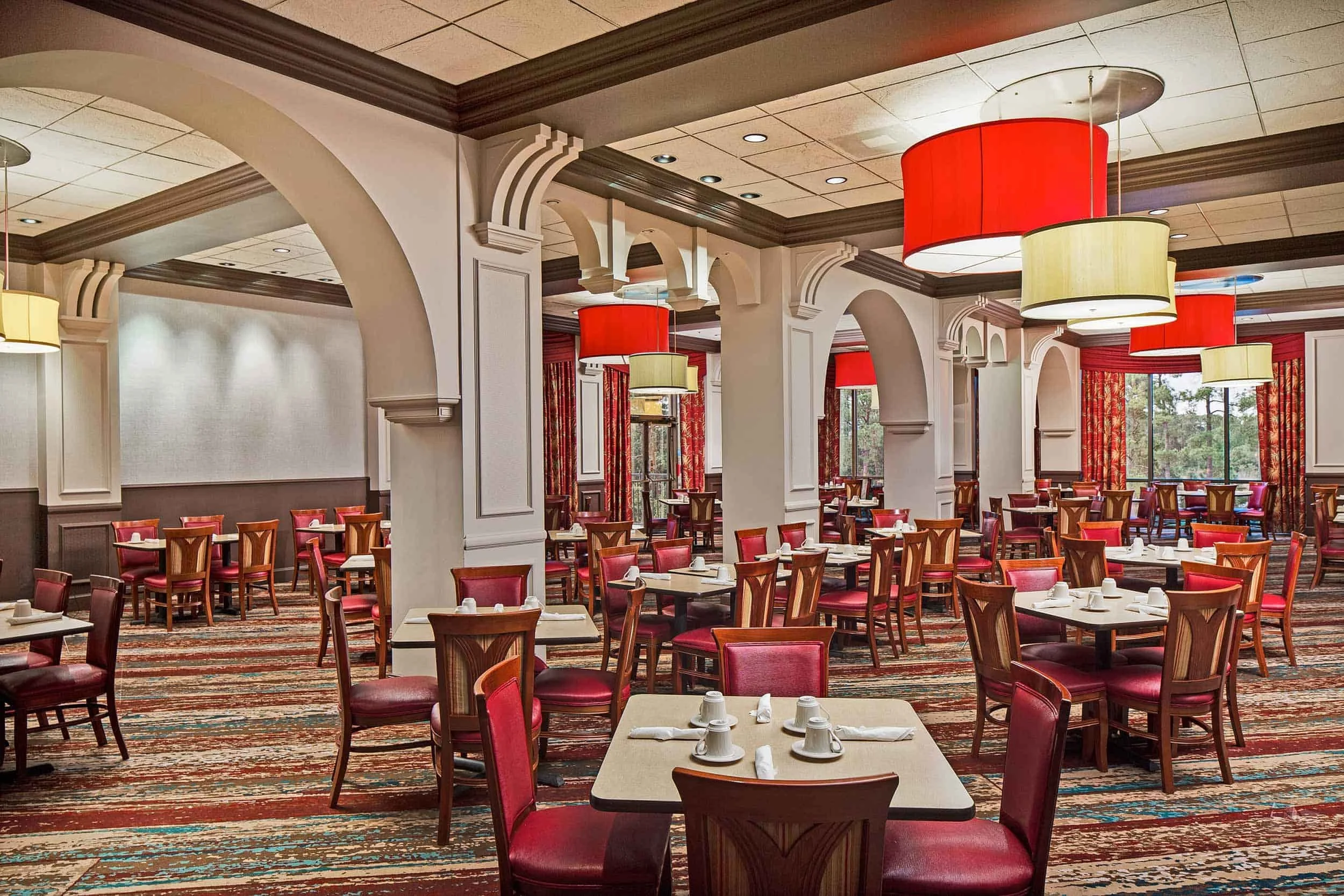
Mention Axminster carpet to an interior designer or hospitality professional, and there is a good chance one fiber specification immediately comes to mind: 80% wool and 20% nylon.
There is good reason for that association. Wool-rich Axminster has a long history in hospitality interiors, offering exceptional design flexibility, durability, appearance retention, and an enormous range of available colors. It remains an excellent choice for restaurants, hotels, country clubs, and other demanding commercial spaces.
But there is an important distinction that sometimes gets overlooked:
Axminster describes how the carpet is woven. It does not require the carpet to be made with an 80/20 wool/nylon pile.
Axminster can also be woven using 100% solution-dyed nylon (SDN). And in restaurants and dining spaces where spills, staining, frequent spot cleaning, and more demanding maintenance protocols are part of everyday life, that combination deserves a closer look.
Not because SDN Axminster is universally better than wool-rich Axminster. It isn't.
It simply gives designers another tool in the specification toolbox.
Axminster Is a Construction, Not a Fiber
This is probably the most important point to understand.
Axminster is a woven method of carpet construction in which the pile yarns and backing structure are integrated during the weaving process. This construction is one of the reasons Axminster has been specified for generations in demanding hospitality and commercial environments.
The traditional pile specification is commonly 80% wool and 20% nylon, and that combination has become so closely associated with Axminster that the two are sometimes treated as though they are inseparable.
They aren't.
Changing the pile fiber to solution-dyed nylon doesn't suddenly make the carpet something other than Axminster. It remains a woven Axminster carpet, with the construction and custom pattern capabilities associated with the product category.
What changes is the fiber, and therefore some of the performance characteristics designers should consider when matching the carpet to the environment.
Why Restaurants Create an Interesting Specification Challenge
Restaurants ask quite a lot from their flooring.
A beautifully designed dining room may look controlled and elegant from the guest's perspective. At floor level, things are considerably less civilized.
Wine gets spilled. Coffee gets knocked over. Sauces find their way off the plate. Food lands under tables. Servers move through the same circulation paths hundreds of times. Chairs are constantly repositioned. Cleaning isn't an occasional event; it's part of daily operations.
The carpet therefore needs to accomplish two very different things at once.
The carpet needs to contribute to the interior design, often through sophisticated pattern, color, scale, and texture. But it also needs to tolerate the realities of a food-and-beverage environment.
That is where the fiber specification becomes particularly important.
What Solution-Dyed Nylon Brings to Axminster
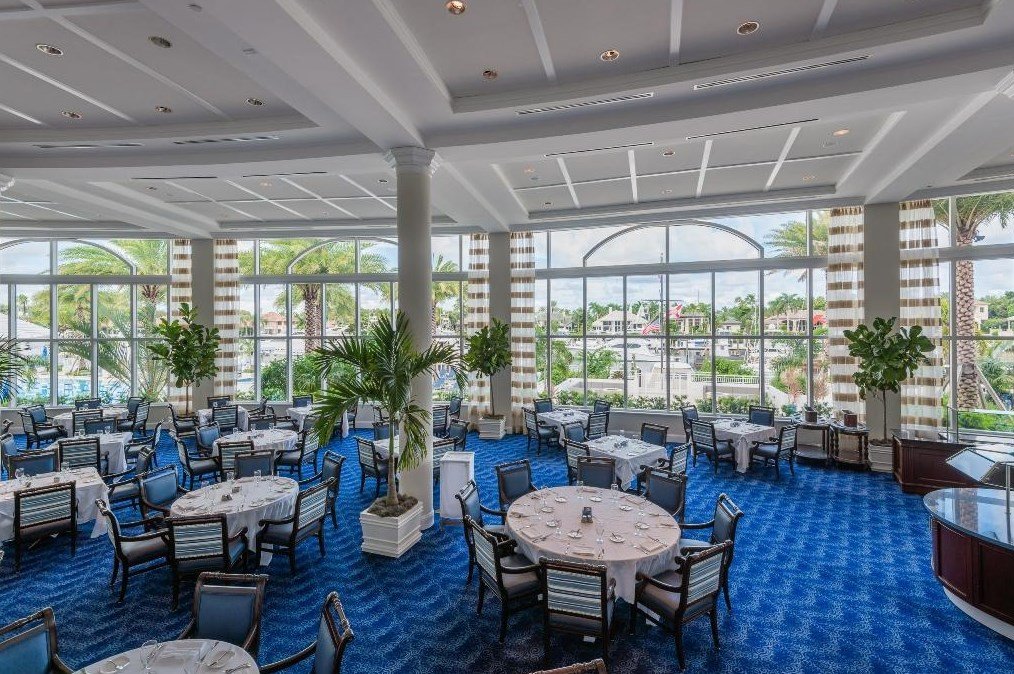
With solution-dyed nylon, color is incorporated into the fiber as it is manufactured rather than being applied to the exterior of an already-produced fiber.
That distinction gives SDN several useful characteristics for demanding commercial environments, particularly where stain resistance and intensive cleaning are major considerations.
For restaurant carpet, some of the most relevant advantages include:
Strong resistance to staining
Excellent colorfastness
Greater tolerance for aggressive cleaning procedures
Good performance under frequent maintenance
Nylon's inherent durability and resilience in high-traffic environments
Combine those properties with woven Axminster construction, and you get an interesting specification: a highly customizable woven carpet paired with a fiber selected specifically for demanding maintenance conditions.
That combination can make considerable sense in restaurants, private dining rooms, food-and-beverage venues, and other commercial interiors where the carpet needs to look refined while living a fairly unforgiving life.
Cleanability Is Where SDN Can Become Especially Compelling
There is an important difference between asking whether a carpet can be cleaned and considering how it may need to be cleaned over its lifetime.
Restaurants can require repeated spot treatment and cleaning because the types of contaminants encountered are different from those in many other commercial spaces. Food oils, beverages, sauces, and other spills can create maintenance challenges that simply don't exist to the same degree in a ballroom or executive conference room.
This is one of the circumstances where solution-dyed nylon deserves consideration.
Because the coloration is integral to the fiber, SDN can tolerate cleaning conditions and chemicals that may not be appropriate for wool. That gives facility and maintenance teams greater flexibility when dealing with difficult stains.
For an owner who expects aggressive or unusually frequent cleaning, that can become a meaningful part of the specification decision.
It doesn't mean every restaurant needs SDN carpet. It means the maintenance program should be discussed while the carpet is being specified, rather than after the first glass of Cabernet hits the floor.
Does That Mean SDN Axminster Is Better for Restaurants?
No, and this distinction matters.
Traditional 80% wool / 20% nylon Axminster remains an outstanding product for restaurant and hospitality interiors. There are plenty of restaurant projects where we would recommend it.
One of its biggest advantages is design flexibility, particularly color.
Wool yarn is available across an exceptionally broad color spectrum, giving designers tremendous freedom when developing custom patterns and matching a specific interior palette. When a project requires unusual shades, subtle color relationships, or an extensive custom palette, wool-rich Axminster can provide possibilities that a solution-dyed nylon yarn bank may not.
SDN Axminster generally has a more limited available color palette.
For many designs, that palette may be more than sufficient. For others, the desired colors may immediately point the specification back toward traditional wool-rich Axminster.
And that's perfectly fine.
The objective shouldn't be to choose SDN because the project happens to be a restaurant. The objective is to determine which Axminster specification best serves the particular restaurant.
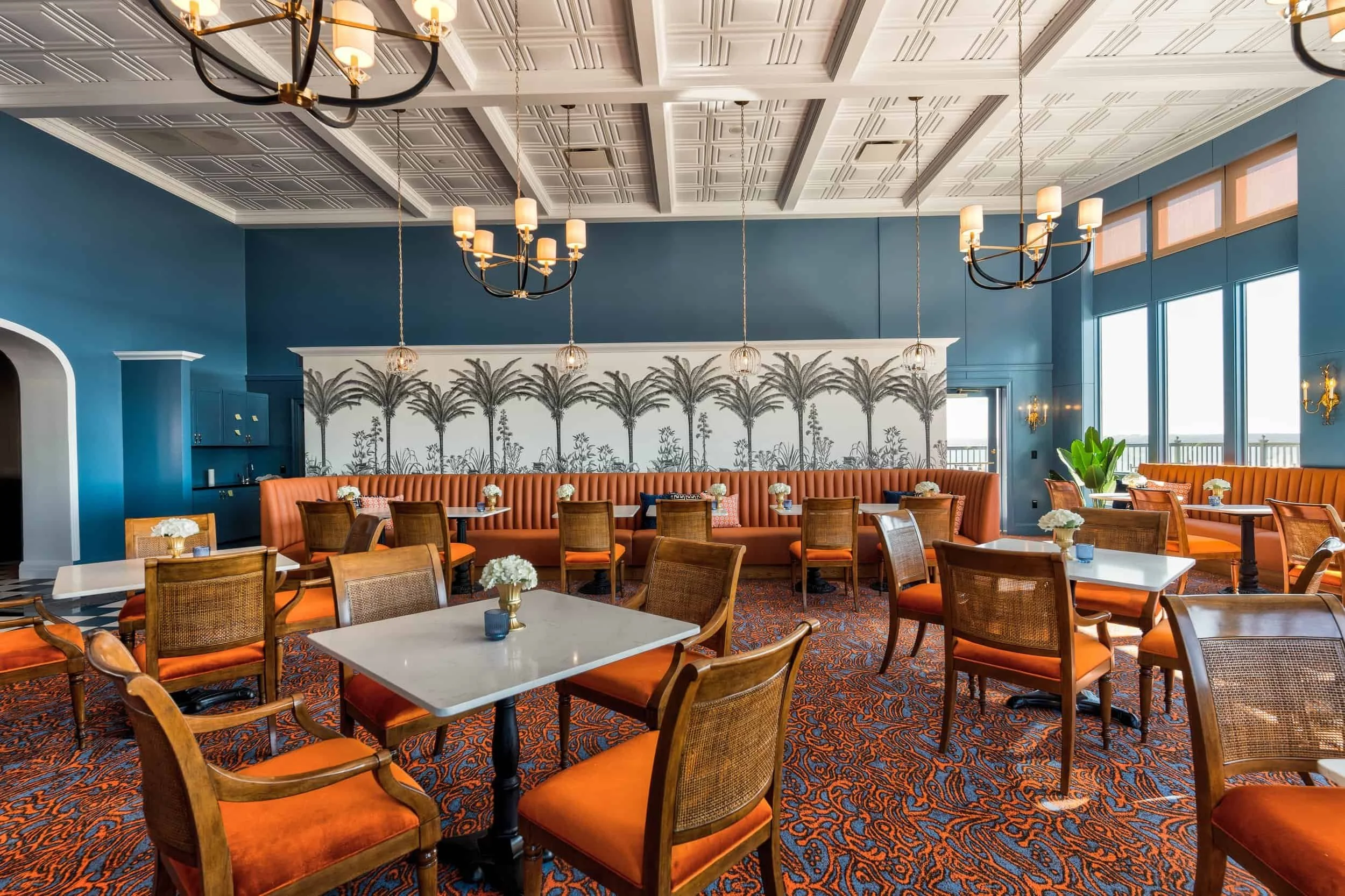
80/20 or SDN? Start With the Priorities
Rather than treating the decision as a competition between fibers, it is more useful to think about what matters most to the project.
If the custom carpet design depends on an expansive or highly specific color palette, traditional 80/20 wool/nylon Axminster may be the stronger choice.
If the owner anticipates particularly demanding cleaning procedures, frequent staining, or maintenance involving chemicals that may not be appropriate for wool, solution-dyed nylon deserves serious consideration.
Sometimes the decision becomes obvious once the artwork and maintenance expectations are reviewed together.
Other times, there is a genuine tradeoff.
That's why fiber selection should happen as part of the design and specification process rather than being treated as a default simply because “Axminster” appears on the finish schedule.
You Still Get the Design Advantages of Woven Axminster
Choosing SDN doesn't mean giving up the reason a designer wanted Axminster in the first place.
Custom Axminster is particularly valuable in hospitality interiors because pattern can be woven directly into the carpet rather than relying on a surface-applied design. That gives designers considerable freedom to develop flooring specifically around the architecture and visual identity of a space.
In a restaurant, that might mean a large-scale organic pattern moving throughout the dining room, a geometric composition reinforcing the architecture, or a more restrained pattern designed to disguise the inevitable evidence of a busy Saturday night.
Pattern isn't purely decorative in these environments, either.
A thoughtfully designed patterned carpet can be much more forgiving of minor spills, soil, and day-to-day appearance changes than a large uninterrupted field of one color.
In other words, design and performance don't have to occupy separate conversations.
Where Else Might SDN Axminster Make Sense?
Restaurants provide one of the clearest use cases, but the same logic can apply elsewhere.
Any high-traffic commercial or hospitality environment where frequent staining and aggressive cleaning are expected may justify evaluating solution-dyed nylon Axminster.
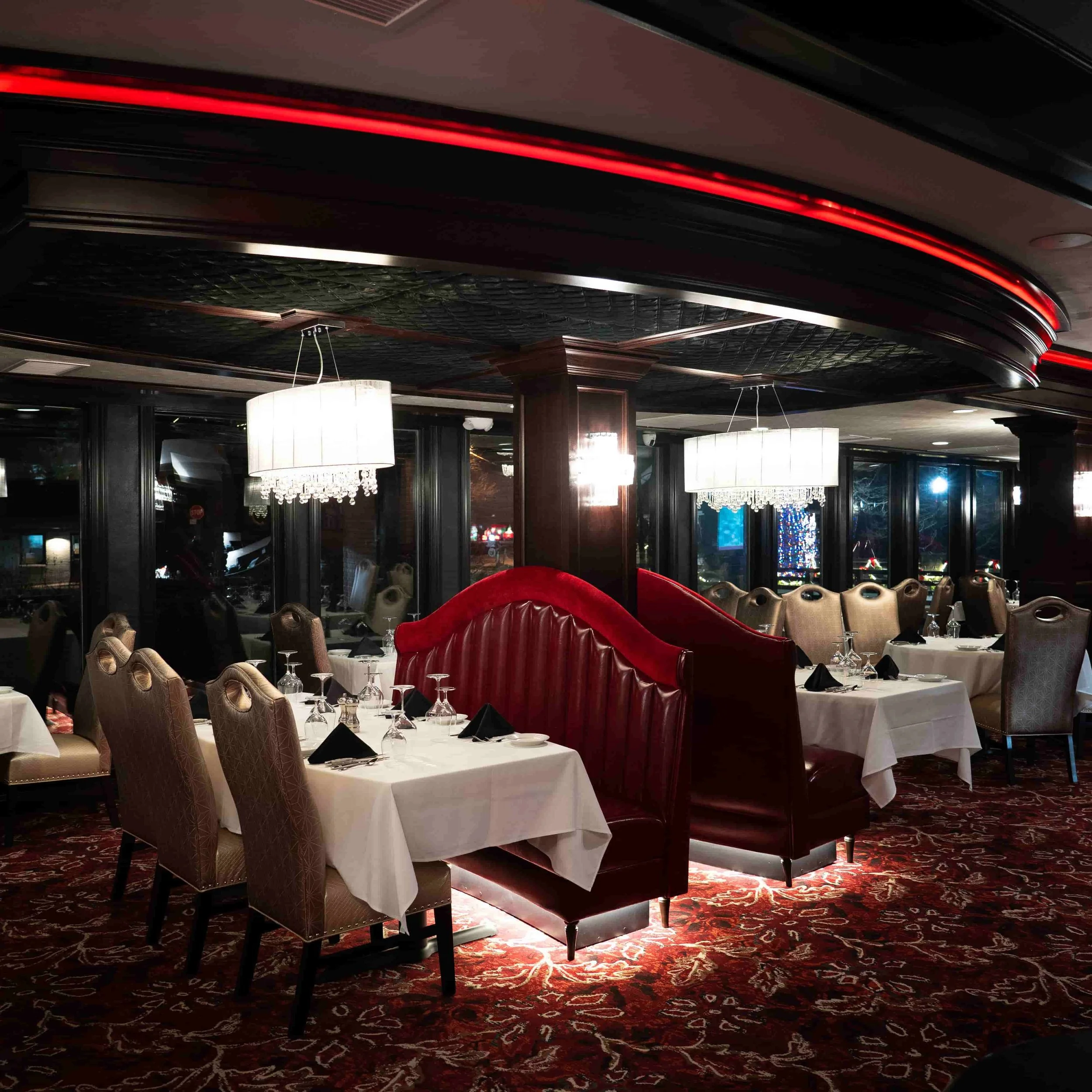
That could include certain food-service areas within hotels and resorts, private club dining rooms, entertainment venues, casino food-and-beverage spaces, and other heavily used public interiors.
The important word is evaluate.
A hotel ballroom doesn't automatically need SDN. A country club dining room doesn't automatically need wool. A restaurant doesn't automatically need either one.
The specification should follow the environment.
Maintenance Should Be Part of the Design Conversation
Flooring decisions are often dominated by what designers can see: pattern, color, scale, texture, and how the carpet interacts with the rest of the interior.
Those things matter enormously.
But with carpet for high-traffic areas , there is another person who deserves a seat at the table: whoever has to maintain it.
Understanding the owner's cleaning procedures before selecting the fiber can prevent problems later. What types of spills are anticipated? How frequently will the carpet be cleaned? What cleaning agents does the facility typically use? Are there particular stains that have caused problems with previous flooring?
Those questions can help determine whether the broader color possibilities of wool-rich Axminster or the cleaning characteristics of SDN should carry more weight.
A successful specification needs to look good on opening night.
It also needs to make sense on night 1,000.
Don't Let the Fiber Decision Happen Too Late
There is another practical reason to discuss 80/20 versus SDN early: the available yarn palette can influence the artwork.
A designer may develop a beautiful custom carpet using colors that are readily achievable in wool, only to decide later that SDN would be preferable for maintenance reasons. If equivalent SDN yarn colors aren't available, compromises may be required.
It is much easier to establish the intended fiber specification first and then develop the carpet design around the appropriate yarn palette.
This is especially important when the design contains numerous colors or requires very precise coordination with upholstery, wallcoverings, millwork, or other interior finishes.
Fiber selection and carpet design shouldn't be two separate stages of the conversation. Ideally, they develop together.
The Best Specification Isn't Always the Default Specification
There is nothing wrong with specifying traditional 80/20 Axminster for a restaurant. In many cases, it will be exactly what we recommend.
But designers and owners should know that it isn't their only Axminster option.
For restaurant and dining environments where demanding cleaning requirements are a major concern, 100% solution-dyed nylon Axminster combines the advantages of woven Axminster construction with the stain resistance, colorfastness, and cleaning flexibility associated with SDN fiber.
For projects where an expansive color palette, particular wool aesthetic, or specific design requirements take priority, traditional wool-rich Axminster remains an exceptional choice.
That's the real takeaway.
The question isn't:
“Which Axminster is better?”
It's:
“Which Axminster makes more sense for this space?”
And that's a much more useful conversation to have before the carpet goes into production.
FAQs
-
Yes. Although Axminster is commonly associated with an 80% wool / 20% nylon pile, Axminster refers to the woven carpet construction rather than a required fiber blend. Axminster carpet can also be manufactured using 100% solution-dyed nylon.
-
It can be an excellent option for restaurants and dining spaces, particularly where stain resistance, frequent cleaning, and tolerance for more demanding cleaning procedures are important. The appropriate fiber should still be selected according to the project's design, maintenance, traffic, and performance requirements.
-
Absolutely. Wool-rich Axminster has a long history of successful use in hospitality and restaurant interiors. It provides excellent durability, appearance retention, custom design capability, and access to an exceptionally broad range of yarn colors.
-
A restaurant may consider SDN when demanding cleaning requirements, stain resistance, and colorfastness are particularly important. Conversely, a project requiring a very broad or specific color palette may favor traditional wool-rich Axminster.
-
Generally, yes. Available solution-dyed nylon yarn palettes can be more limited than the extensive color possibilities available with wool. Designers considering SDN should therefore review available colors early in the design process.
-
Solution-dyed nylon generally provides greater chemical and colorfastness resistance than wool, making it valuable where more aggressive cleaning procedures are anticipated. However, cleaning products and methods should always be compatible with the specific carpet manufacturer's recommendations rather than assuming that any chemical can safely be used.
-
No. It can also be considered for other high-traffic hospitality and commercial environments where staining, frequent maintenance, or demanding cleaning requirements are significant concerns.
Final Thoughts
Solution-dyed nylon Axminster is not intended to replace traditional 80/20 wool/nylon Axminster. It simply gives designers, owners, and specifiers another option when a project requires the durability and custom design capabilities of woven Axminster along with greater flexibility for demanding cleaning conditions.
For restaurants and dining spaces, the right choice depends on the priorities of the project. Wool-rich Axminster may be the stronger fit when an expansive color palette and a premium wool aesthetic are central to the design. Solution-dyed nylon may deserve consideration when stain resistance, frequent maintenance, and more aggressive cleaning procedures carry greater weight.
The important part is knowing that both options exist.
A thoughtful specification should consider the design, traffic, maintenance program, available yarn palette, and long-term performance requirements together. When those factors are addressed early, the carpet can be designed not only to look right on opening day, but to perform appropriately for the space over time.
Planning Carpet for a Restaurant or Dining Space?
Explore custom Axminster carpet solutions for restaurants, private dining rooms, clubs, hospitality interiors, and other high-traffic commercial environments.

Royal American Carpets designs and manufactures custom high-end carpets and rugs for hotels, clubs, residences, and beyond. Crafted to last, built to impress.
SECTORS SERVED: