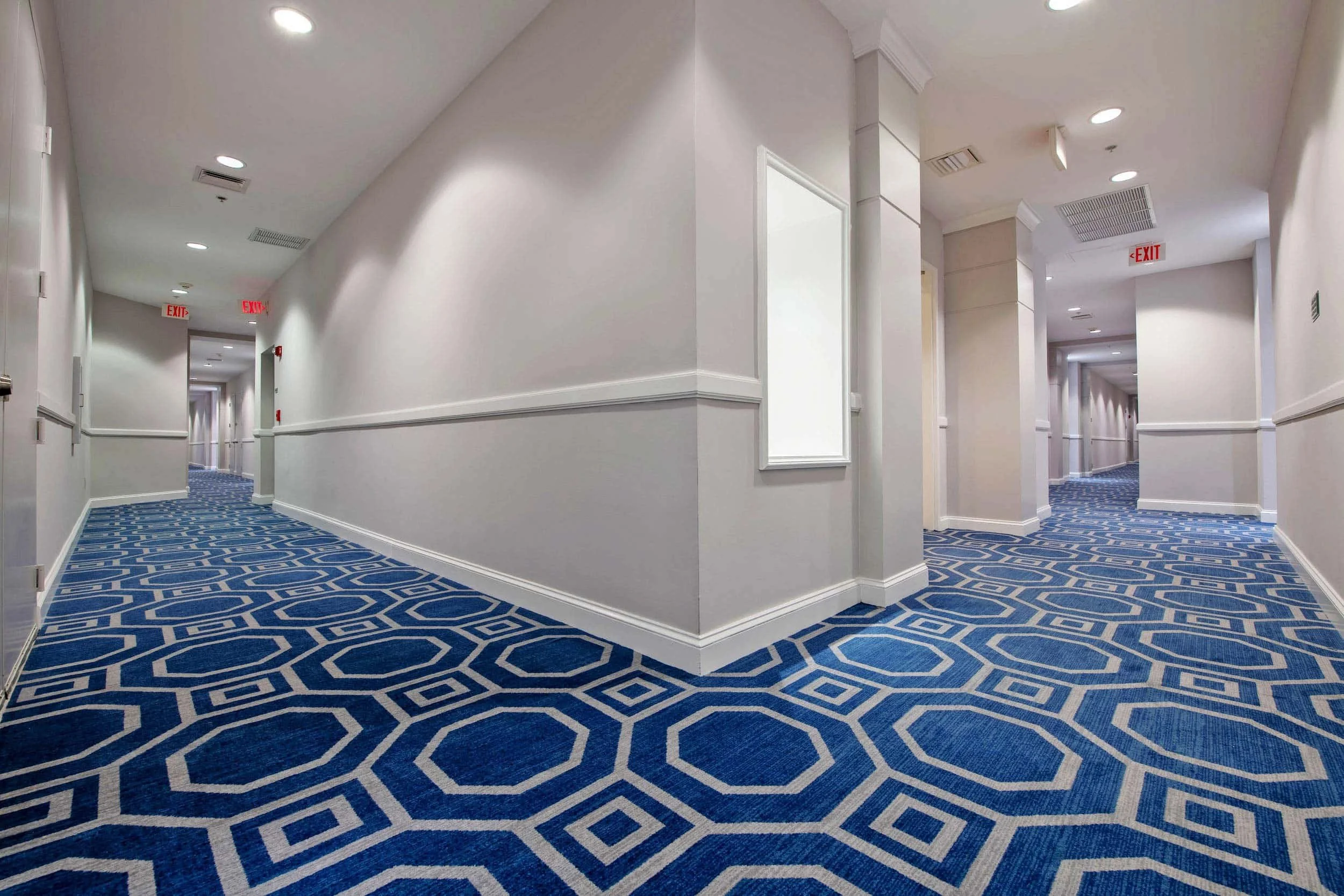
Custom carpet is designed to do more than cover a floor.
In a hotel lobby, country club, restaurant, condominium corridor, corporate interior, or other high-traffic commercial space, the carpet is often a significant part of the design itself. Pattern, color, scale, construction, and material are selected carefully because the floor has a job to do visually as well as physically.
Then people start walking on it.
Thousands of footsteps, rolling luggage, dining chairs, tracked-in soil, coffee, wine, cleaning carts, renovation dust, and the occasional mystery stain all become part of the carpet's daily life.
The good news is that quality commercial carpet is designed to handle demanding environments. The less glamorous truth is that even excellent carpet needs a thoughtful maintenance program if it is expected to look good for years.
And maintenance is about much more than scheduling a deep cleaning every so often.
Good Carpet Maintenance Starts Before the Carpet Looks Dirty
One of the biggest mistakes in commercial carpet care is waiting until the floor visibly needs attention.
By the time traffic lanes look dull or the carpet begins showing noticeable soil, a considerable amount of material may already be sitting within the pile.
Dry soil is particularly important because it can work its way into the carpet and contribute to abrasive wear as people continue walking across it.
That means the most effective maintenance programs are preventive rather than reactive.
A well-designed program considers:
how much traffic the area receives
where soil enters the building
how frequently different areas should be vacuumed
the types of spills likely to occur
the carpet fiber and construction
appropriate cleaning methods and chemistry
how quickly stains are treated
The goal is not simply to make dirty carpet clean again.
The goal is to prevent the carpet from reaching that point unnecessarily.
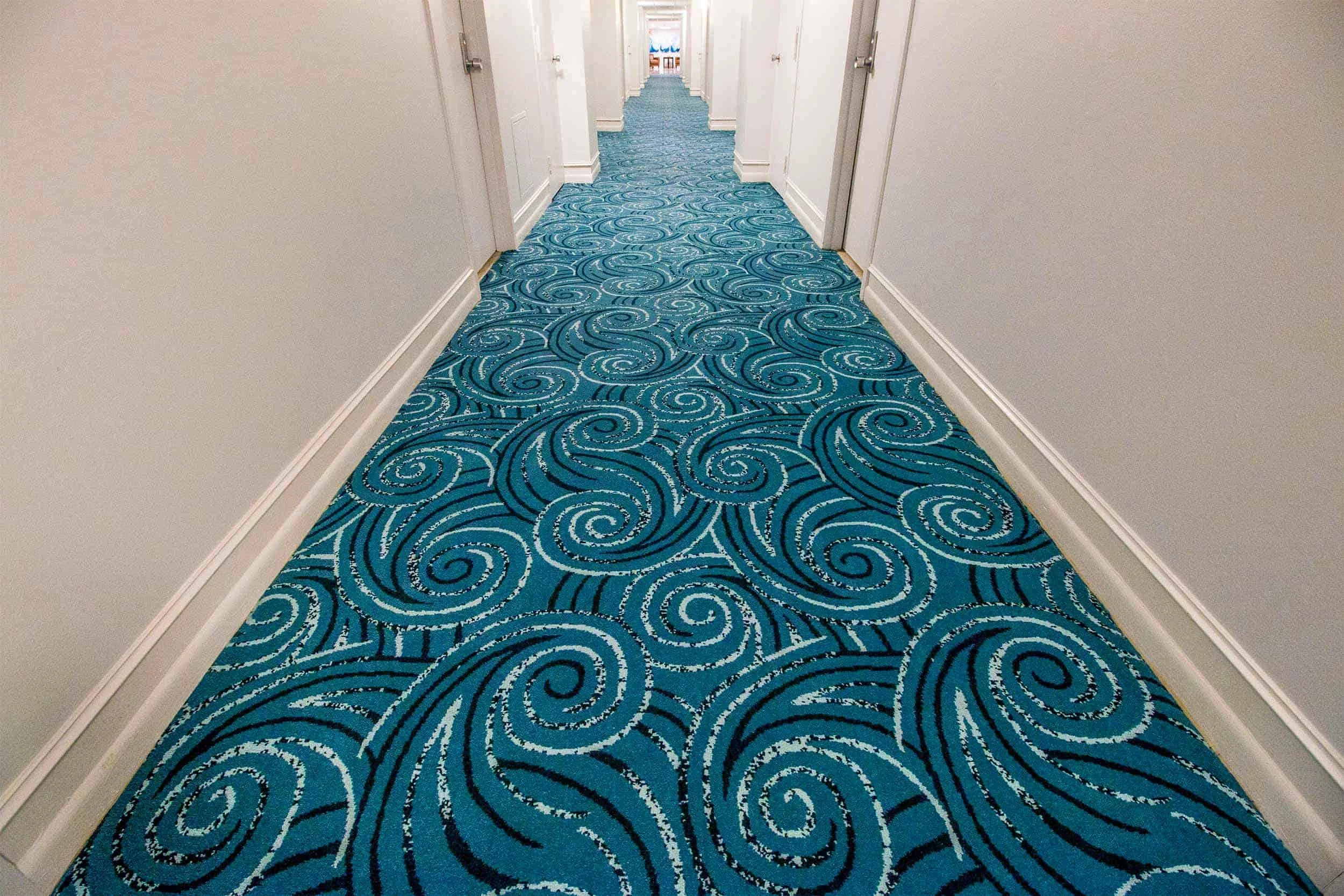
Vacuuming Is More Important Than It Gets Credit For
Vacuuming may be the least exciting part of carpet maintenance, but it is also one of the most important.
Commercial interiors accumulate dry particulate soil constantly. Some of it is visible. Much of it is not.
High-traffic areas such as entrances, corridors, elevator lobbies, restaurant circulation paths, and reception spaces generally require more frequent attention than private offices or lightly used meeting rooms.
That distinction matters.
A maintenance schedule based purely on square footage often misses the reality of how the building operates. A 200-square-foot elevator lobby may need considerably more attention than a much larger private room.
Maintenance frequency should follow traffic patterns, not just room size.
Areas that receive repeated foot traffic should be vacuumed often enough that soil is removed before it works deeper into the carpet.
It is not glamorous, but neither is replacing carpet early because dirt won.
Stop Soil at the Door Whenever Possible
One of the easiest ways to extend the life of commercial carpet is to reduce how much soil reaches it in the first place.
Effective entry systems can make a substantial difference, particularly in buildings with exterior entrances.
Walk-off mats and entry flooring help capture moisture, sand, grit, and other contaminants before they migrate deeper into the interior.
This is particularly useful in:
hotel entrances
clubhouses
restaurants
condominium lobbies
office buildings
event and conference facilities
The principle is simple: soil that never reaches the carpet never has to be removed from it.
That makes entrance maintenance part of the carpet maintenance program, even though the entrance system itself may not be carpet.
Treat Spills Quickly, but Don't Panic
Spills are inevitable in commercial interiors.
Restaurants and dining rooms obviously see their share, but hotels, conference spaces, lounges, clubhouses, and corporate environments are hardly immune.
The first rule is straightforward: respond quickly.
The second rule is equally important: don't turn a small spill into a larger problem by attacking it with the wrong cleaner.
Different carpet fibers respond differently to cleaning chemistry. A product that may be appropriate for solution-dyed nylon might not be appropriate for wool. Some stains may require specialized treatment. Excessive scrubbing can also distort pile or spread contamination.
The appropriate response generally involves removing excess material, blotting rather than aggressively rubbing, and using a cleaning method compatible with the carpet manufacturer's recommendations.
A facilities team should ideally know what the carpet is made from before the emergency happens.
The middle of a banquet is not the ideal time to begin researching fiber chemistry.
Carpet Fiber Changes the Maintenance Conversation
Not every custom commercial carpet should be maintained exactly the same way.
Fiber matters.
Traditional wool-rich Axminster, solution-dyed nylon Axminster, hand-tufted wool rugs, nylon carpet, and other constructions can have different cleaning considerations.
That does not mean maintenance has to become complicated. It means the cleaning program should be appropriate for the product rather than applying one universal procedure to every carpet in the building.
| Carpet Type | Maintenance Approach | Key Considerations |
|---|---|---|
| Wool-Rich Axminster | Frequent vacuuming, prompt spot treatment, and periodic professional cleaning | Use wool-compatible chemistry and avoid overly aggressive cleaning agents or excessive alkalinity |
| Solution-Dyed Nylon Axminster | Frequent vacuuming, routine spot cleaning, and periodic professional cleaning | Greater tolerance for demanding cleaning procedures, but manufacturer-approved chemistry should still be followed |
| Hand-Tufted Wool | Regular vacuuming with appropriate equipment and prompt blotting of spills | Construction, backing, and fiber blend may require more specialized professional care |
| Hand-Tufted Nylon | Regular vacuuming, prompt spot treatment, and periodic professional cleaning | Generally offers good stain-cleaning flexibility, but backing and construction should still guide the cleaning method |
| Viscose / Bamboo Silk Accents | Gentle routine care and cautious spot treatment | Lustrous fibers can react differently to moisture and cleaning, so specialized professional care may be appropriate |
Wool-rich carpet
Wool is widely used in premium hospitality Axminster carpet because of its appearance, resilience, design flexibility, and long history in demanding commercial environments.
It should also be cleaned using methods and chemistry appropriate for wool.
Overly aggressive cleaning agents or inappropriate alkalinity can create problems, which is why manufacturer's recommendations and qualified professional cleaning are important.
Solution-dyed nylon
Solution-dyed nylon is frequently selected where stain resistance, colorfastness, and greater tolerance for demanding maintenance procedures are priorities.
That can make it particularly useful in certain food-and-beverage and other high-maintenance environments.
Still, “solution-dyed” should never be interpreted as permission to use any chemical available in the maintenance closet.
Product-specific cleaning guidance still matters.
Hand-tufted carpet and rugs
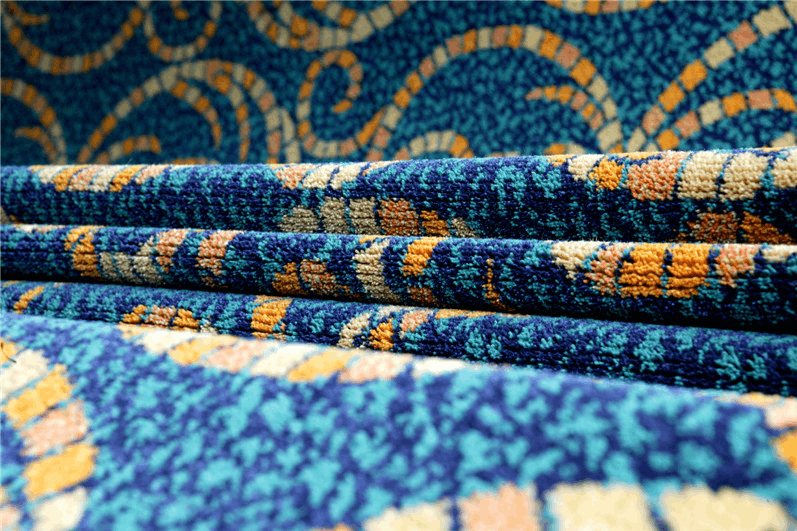
Custom hand-tufted carpets and area rugs may incorporate wool, nylon, viscose, bamboo silk, or combinations of fibers.
Those materials can behave differently during cleaning.
A rug with lustrous accent fibers, for example, may require more specialized care than a straightforward commercial nylon construction.
This is one reason facilities teams should retain the original carpet specification after installation rather than treating it as paperwork that disappears with the construction documents.
High-Traffic Areas Should Have Their Own Maintenance Schedule
Commercial interiors rarely wear evenly.
The main path from a hotel entrance to the front desk may receive dramatically more traffic than the carpet several feet away.
A restaurant aisle used continuously by servers experiences different conditions than the area beneath a banquette.
A condominium corridor may show heavier use near elevators and unit entrances.
A successful commercial carpet maintenance program recognizes those differences when it comes to carpet in high-traffic areas.
Instead of treating the entire floor identically, divide it into traffic zones.
Heavy-use zones can receive more frequent vacuuming, spotting, and interim cleaning while lower-traffic areas are maintained on a less aggressive schedule.
This approach is usually more efficient than waiting until the entire installation appears equally dirty.
It also helps reduce the development of obvious traffic lanes, which can make otherwise healthy carpet look prematurely worn.
Don't Confuse Soil With Wear
A carpet can sometimes look worn when it is actually dirty.
Traffic lanes accumulate soil differently from surrounding areas, causing changes in color and reflectance that may initially resemble fiber deterioration.
Professional cleaning may restore much of the appearance.
But the opposite can also happen.
If fibers have been physically crushed, abraded, distorted, or damaged, cleaning cannot reverse the underlying wear.
Understanding the difference matters because the response is different.
Cleaning addresses contamination.
Maintenance can help slow wear.
Neither can magically rebuild damaged pile.
Regular inspection gives facilities teams a better chance of identifying problems before they become permanent.
Deep Cleaning Should Be Planned, Not Delayed Until an Emergency
Periodic deep cleaning is an important part of maintaining commercial carpet, but frequency should depend on the environment rather than an arbitrary annual calendar.
Some commercial spaces may need restorative cleaning relatively frequently. Others may require it much less often.
Variables include traffic volume, fiber type, construction, climate, entry conditions, food service, maintenance quality, and the amount of airborne or tracked-in soil.
The method matters too.
Hot-water extraction is commonly used for many commercial carpets, but the appropriate process should always correspond with the carpet construction and manufacturer's recommendations.
Whatever method is used, one factor is easy to overlook: drying matters.
Carpet should be allowed to dry properly before heavy traffic resumes whenever possible. Returning furniture and foot traffic too quickly can interfere with the cleaning process and create additional problems.
In 24-hour hospitality environments, that may require planning different areas in phases rather than attempting to clean everything simultaneously.
Chairs, Carts and Furniture Deserve Attention Too
Foot traffic gets most of the blame, but commercial carpet encounters plenty of other abuse.
Dining chairs move constantly.
Housekeeping and service carts follow repeated routes.
Conference-room chairs roll back and forth.
Furniture legs concentrate weight into small areas.
Those forces should be considered both when specifying the carpet and when maintaining it.
In restaurants, for example, carpet beneath dining chairs experiences a very different type of repeated movement than carpet in open circulation areas.
Furniture glides should be kept in good condition, damaged chair feet should be repaired, and rolling equipment should be appropriate for the flooring surface.
Sometimes the carpet is blamed for a problem that actually started several inches above it.
Be Careful With DIY Cleaning Chemistry
Commercial facilities often have access to a formidable collection of cleaning products.
That doesn't mean all of them belong on the carpet.
More chemical is not necessarily more clean.
Using overly aggressive spot removers, mixing cleaning products, applying excessive detergent, or failing to rinse appropriately can create new appearance problems while attempting to solve the original one.
Residue can sometimes attract additional soil, which leads to more cleaning, which leads to more residue.
That is not a maintenance program. It is a hobby no facilities department wants.
For valuable custom carpet, maintenance teams should have clear approved procedures and know when a stain should be escalated to a professional cleaner.
Pattern and Color Can Make Maintenance Easier
Maintenance actually begins during the design process.
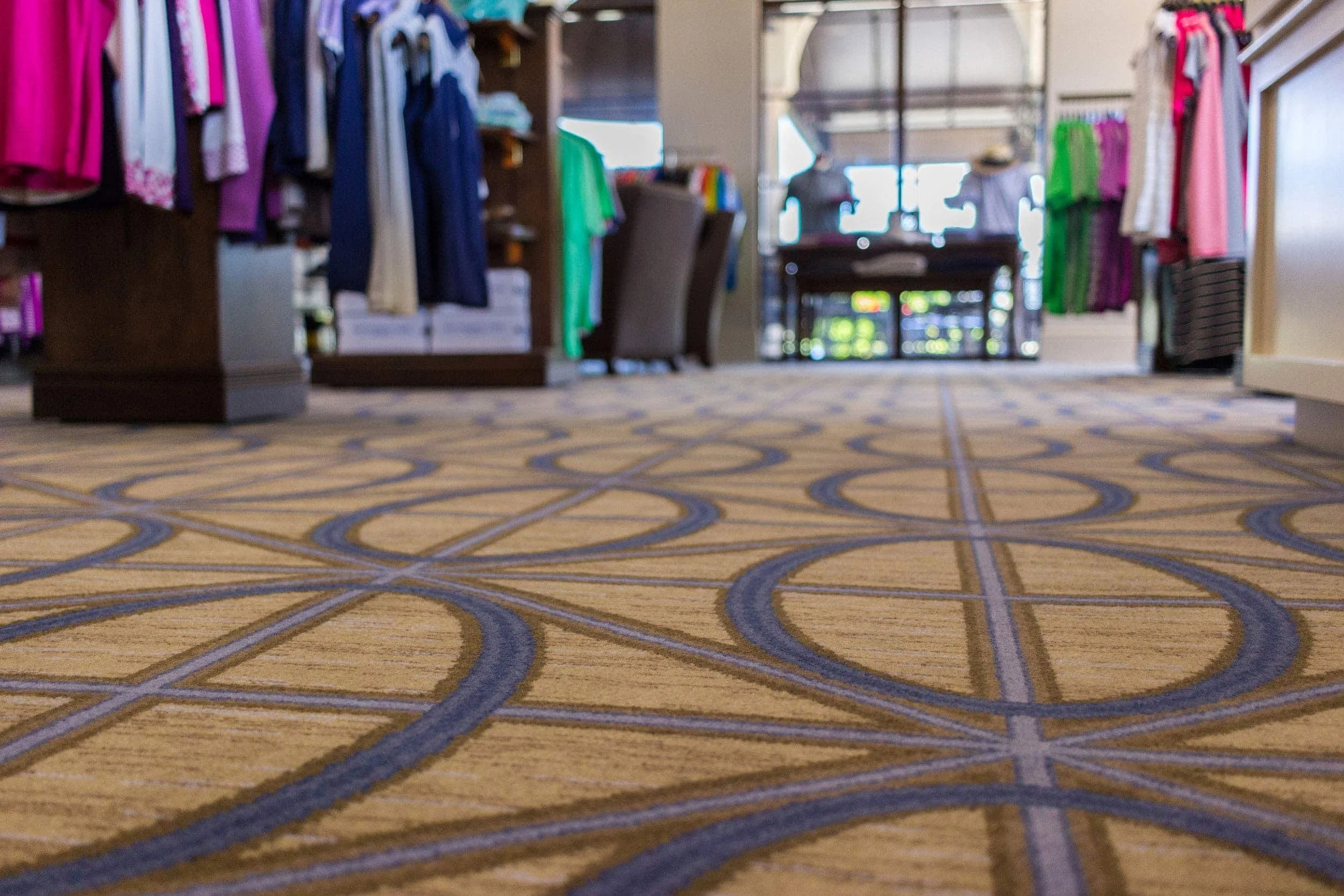
A large field of very light, nearly solid carpet will reveal soil differently from a patterned carpet incorporating multiple tones.
Very dark carpet has its own challenges, including the potential to reveal lint and light-colored debris.
This does not mean every high-traffic commercial carpet needs to look busy.
It means pattern and color can contribute to appearance retention.
A suitable custom carpet design can introduce enough visual movement to help disguise minor day-to-day appearance changes while still supporting the architecture and interior design.
That is particularly valuable in heavily used hospitality environments where the carpet cannot look freshly installed every hour of every day.
Renovation Work Can Be Surprisingly Hard on Carpet
One maintenance issue that deserves more attention occurs when construction work takes place after carpet has already been installed.
Dust, drywall debris, paint, adhesives, rolling equipment, and heavy contractor traffic can be extremely difficult on finished flooring.
If carpet must remain in place during renovation, protection should be planned carefully.
Temporary coverings should be appropriate for the carpet and installed so that they do not create adhesive residue, moisture issues, or other damage.
Ideally, carpet installation should also be sequenced late enough in the construction schedule that unnecessary exposure is minimized.
A beautiful custom carpet is not improved by spending three weeks underneath a parade of ladders and drywall carts.
Keep the Original Specification and Maintenance Information
One of the easiest things an owner can do is also one of the most frequently overlooked: keep the carpet records.
Facility personnel change. Management companies change. Buildings get renovated. Five years later, someone may be trying to determine exactly what is installed in a ballroom or corridor.
Maintaining basic records can eliminate a great deal of guesswork.
Useful information includes the carpet manufacturer, construction, fiber content, color or pattern reference, installation date, cleaning recommendations, and any attic stock retained for future repairs.
For custom carpet, keeping the original artwork and production information can also be useful if replacement material is ever required.
When Should Commercial Carpet Be Professionally Cleaned?
There isn't one universal answer.
Professional cleaning should occur often enough to prevent embedded soil and staining from degrading the carpet's appearance, but not simply because a predetermined date appears on the calendar.
A heavily trafficked restaurant may have very different requirements from a corporate boardroom.
Warning signs that additional cleaning may be appropriate include visible traffic lanes, recurring spots, noticeable soil accumulation, loss of brightness, or areas that no longer respond adequately to routine maintenance.
A professional cleaner familiar with the specific fiber and construction should be able to recommend an appropriate program.
For premium custom carpet, experience with commercial installations matters.
Maintenance Cannot Fix the Wrong Specification
Good maintenance can substantially contribute to carpet longevity.
But it cannot compensate indefinitely for a carpet that was poorly matched to the environment.
A lightly constructed product placed in an extremely demanding traffic area will still face limitations. The same is true when fiber selection, density, pattern, or installation method does not correspond with actual use.
That is why long-term carpet performance begins before manufacturing.
Traffic levels, maintenance expectations, cleaning procedures, design requirements, fiber selection, and construction should all be considered during specification.
The maintenance department and the design team may not always sit at the same table.
For commercial carpet, they probably should talk more often.
FAQs
-
Vacuuming frequency should be based primarily on traffic levels and soil exposure. Entrances, corridors, elevator lobbies, restaurants, and other high-traffic areas may require frequent or even daily attention, while lower-traffic spaces can often follow a less intensive schedule.
-
There is no single cleaning interval appropriate for every commercial installation. Traffic, carpet construction, fiber, soil levels, food service, climate, and routine maintenance all influence how frequently restorative cleaning is needed.
-
Consistent vacuuming, rapid spot treatment, effective entry systems, appropriate professional cleaning, fiber-specific maintenance procedures, and early attention to high-traffic areas can all help extend the useful life and appearance of commercial carpet.
-
Yes. Cleaning chemistry that is incompatible with the carpet's fiber or construction can potentially cause discoloration, fiber damage, residue, or other problems. Cleaning products should follow the manufacturer's recommendations for the specific carpet.
-
Not necessarily. Wool carpet has a long history in demanding hospitality and commercial environments, but it should be maintained using cleaning methods and chemistry appropriate for wool. A properly designed maintenance program is more important than assuming one fiber is universally easier or harder to maintain.
-
Solution-dyed nylon offers useful stain-resistance and colorfastness characteristics, but it still requires regular vacuuming, spot cleaning, and periodic professional maintenance. Fiber performance does not eliminate the need for a maintenance program.
-
Cleaning can remove soil and improve appearance when discoloration is caused by contamination. It cannot reverse permanent fiber abrasion, crushing, pile distortion, or other physical damage.
-
Pattern can help disguise soil, minor staining, and everyday appearance changes more effectively than some large solid fields. However, pattern does not eliminate maintenance requirements or prevent physical wear.
Final Thoughts
Commercial carpet does not fail simply because people walk on it. That is what it was designed for.
Problems are more likely when soil is allowed to accumulate, spills are treated incorrectly, high-traffic zones receive too little attention, or cleaning procedures do not match the carpet's fiber and construction.
A thoughtful maintenance program protects more than the floor. It protects the design investment that went into creating it.
For custom carpet in hotels, restaurants, clubs, condominiums, corporate interiors, and other high-traffic commercial spaces, the formula is relatively straightforward: specify appropriately, prevent what you can, remove soil consistently, treat stains intelligently, and clean according to the product rather than habit.
Do that well, and a quality carpet has a much better chance of looking like part of the interior for years rather than reminding everyone how long it has been there.

Royal American Carpets designs and manufactures custom high-end carpets and rugs for hotels, clubs, residences, and beyond. Crafted to last, built to impress.
SECTORS SERVED: