Corporate Office Carpet: Design for Executive and High-Traffic Spaces
The Modern Office Has More Than One Personality
A corporate office can change character in a matter of steps.
The reception area may be busy and energetic. A few doors away, an executive boardroom calls for quiet, focus, and a more refined atmosphere. Corridors absorb steady foot traffic throughout the day, while conference rooms, private offices, lounges, and collaborative spaces each have their own functional demands.
Expecting one carpet specification to handle every environment equally well is asking a lot from the floor.
The best commercial carpet strategies consider how each space is actually used, then balance design, durability, acoustics, maintenance, and long-term appearance accordingly. In high-end corporate interiors, flooring can also reinforce something less measurable but equally important: the impression a company makes on employees, clients, and visitors.
First Impressions Start in the Reception Area
Reception spaces do a surprising amount of work.
They welcome visitors, introduce the company's visual identity, connect circulation paths, and often experience some of the highest traffic in the office. The flooring needs to look polished at 9 a.m. on Monday and still look polished after a week of clients, deliveries, rolling luggage, coffee runs, and everything else an active workplace throws at it.
This is where performance and design need to cooperate.
Pattern and color can help establish visual identity while also disguising everyday soil and minor appearance changes better than an unforgiving solid field. Scale matters as well. A dramatic reception area may accommodate a larger pattern, while a smaller entrance may benefit from something quieter and more restrained.
The goal isn't necessarily to make visitors notice the carpet.
It's to make the entire space feel considered.
Executive Spaces Call for a Different Approach
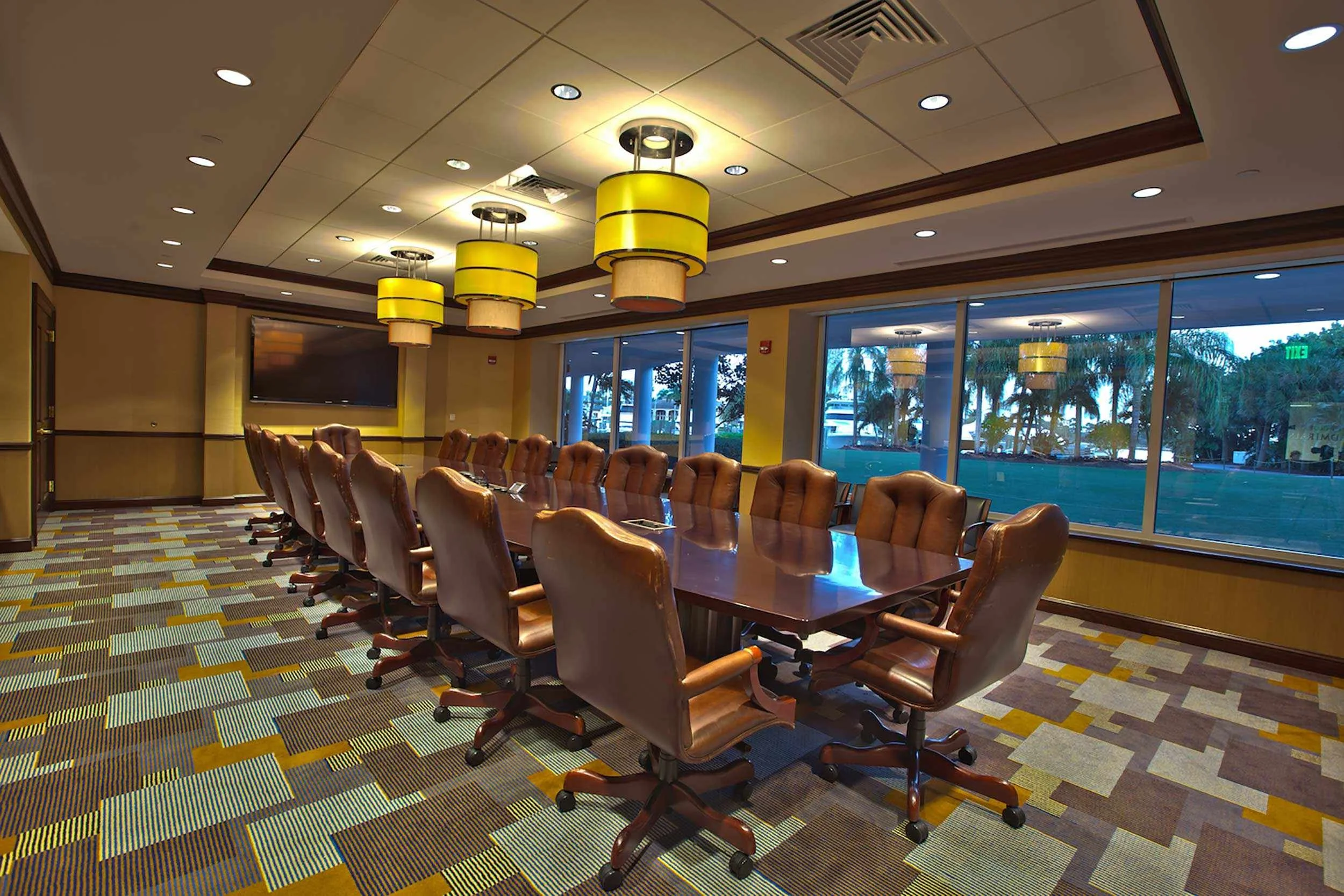
Walk into the boardroom and the priorities change.
Executive offices and boardrooms typically experience less foot traffic than reception areas and primary corridors, giving designers greater flexibility to emphasize comfort, texture, detail, and material quality.
Carpet can also provide an important acoustic advantage in rooms built around conversation. Hard surfaces reflect sound, while textile flooring helps absorb it, creating a quieter environment for meetings, presentations, and video conferences.
For executive spaces, designers may consider custom broadloom carpet, inset carpet, or custom area rugs depending on the architecture and furniture plan.
The flooring can be understated or distinctive, but it should feel deliberate. A boardroom surrounded by carefully selected millwork, lighting, furniture, and artwork deserves more consideration than whatever happened to be specified down the hall.
High-Traffic Areas Need to Earn Their Keep
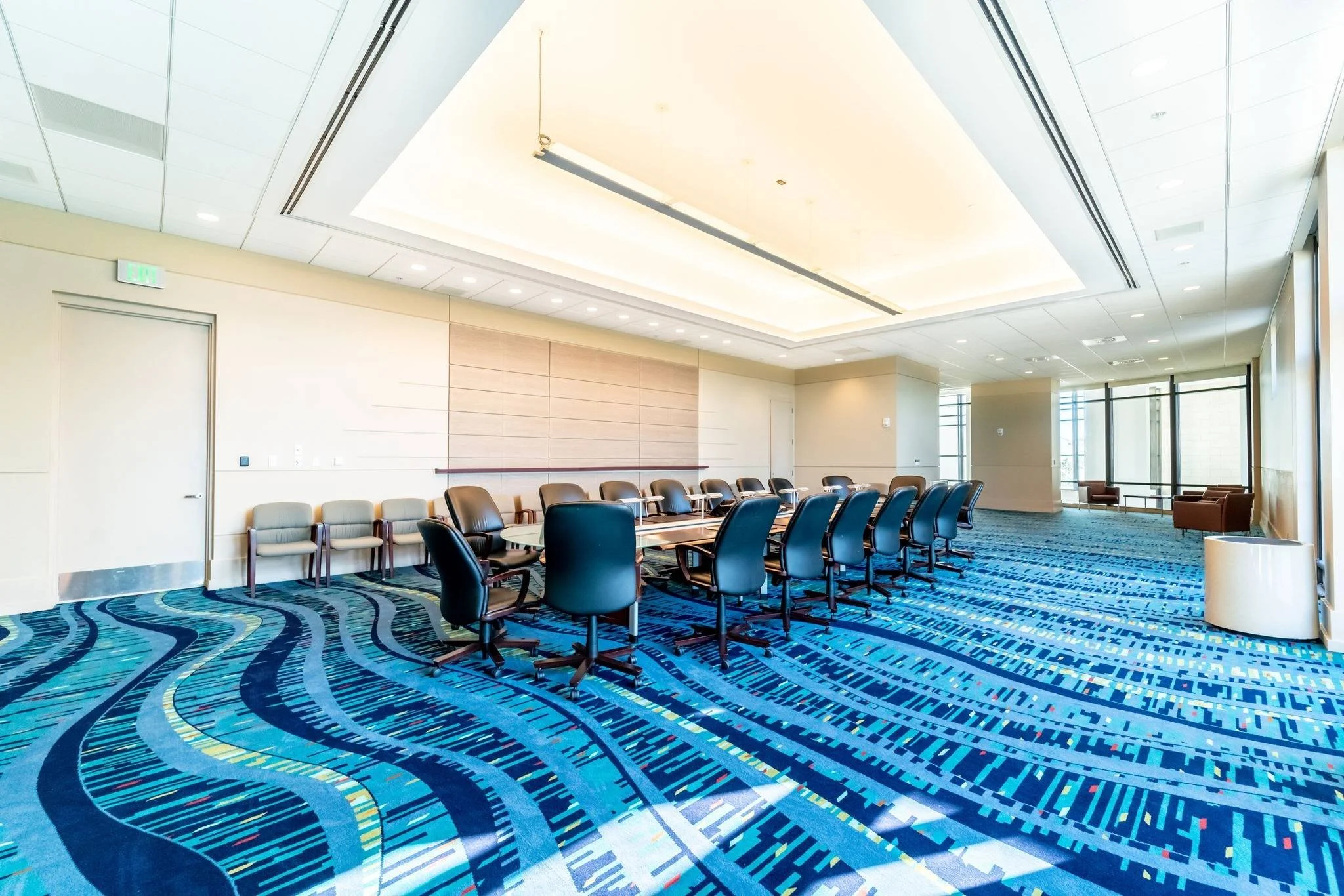
Corporate offices aren't convention centers, but certain areas can accumulate substantial traffic.
Main corridors, elevator lobbies, reception areas, conference centers, employee gathering spaces, and connections between departments may see hundreds or even thousands of footsteps throughout a typical workweek.
These areas require a more performance-driven specification.
Important considerations include:
Traffic volume
Appearance retention
Resistance to crushing and matting
Maintenance requirements
Pattern and color
Expected service life
The appropriate carpet construction depends on the project, but the objective remains consistent: maintain a professional appearance without requiring the facilities team to perform miracles every Friday afternoon.
Many of the same principles used when selecting carpet for high-traffic areas apply to busy corporate corridors, reception spaces, and conference facilities.
Pattern Can Do More Than Make the Floor Interesting
Corporate carpet doesn't have to be gray.
It often is, of course. Gray has had quite a career.
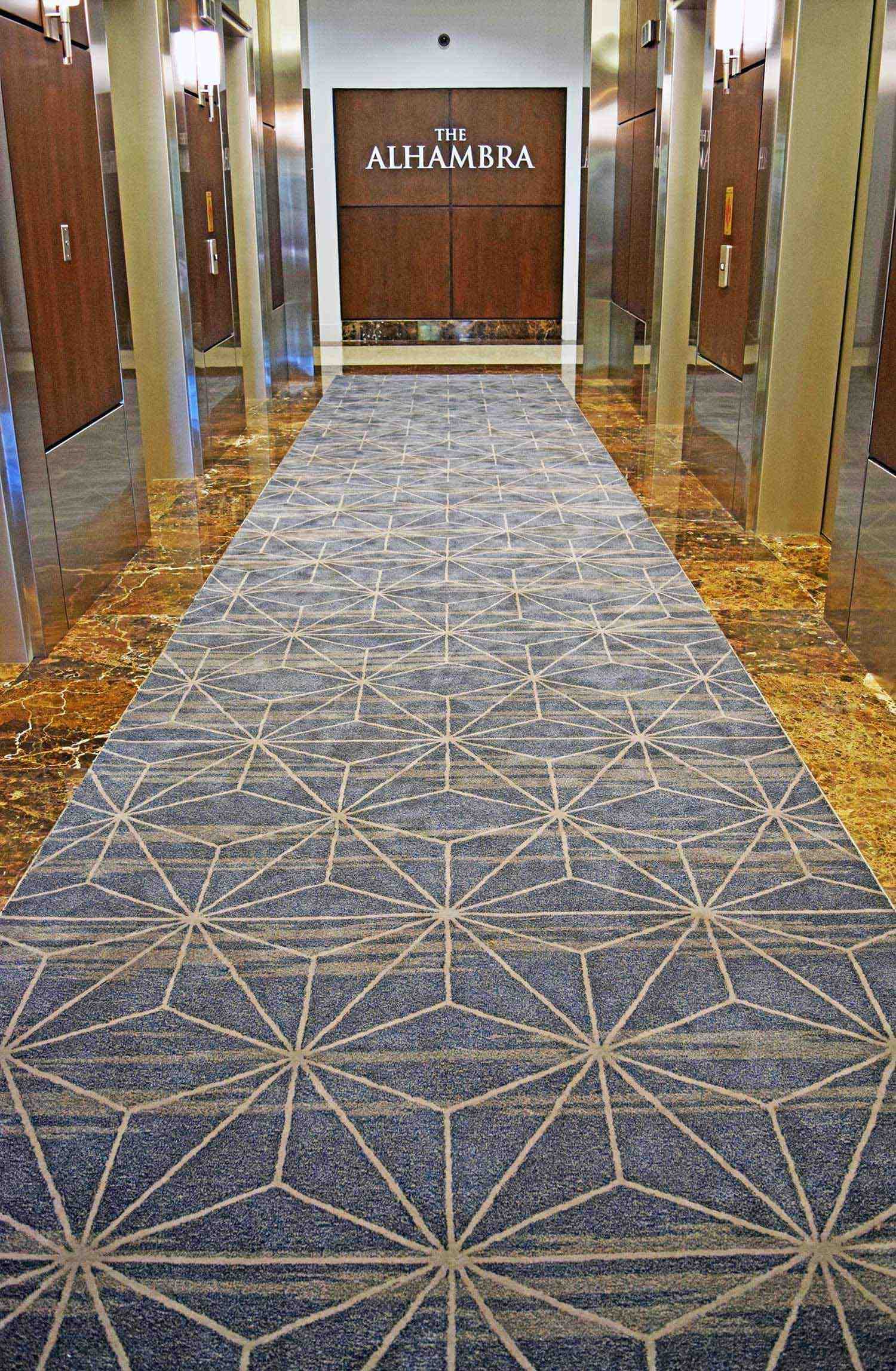
But custom pattern gives designers an opportunity to introduce personality without turning an office into a theme park.
Patterns can incorporate architectural geometry, subtle movement, brand-inspired colors, or abstract elements that connect the flooring with other finishes throughout the interior. In larger corporate environments, changes in pattern or color can also distinguish departments, circulation routes, collaboration zones, and executive areas.
The strongest designs usually aren't literal interpretations of a corporate logo. Instead, they borrow from the company's visual language and translate it into something architectural.
That tends to age considerably better than putting the logo everywhere it will fit.
Corporate Branding Doesn't Have to Be Obvious
Brand identity in flooring works best when it feels integrated rather than applied.
Thoughtful custom carpet design can translate brand colors, geometry, and architectural cues into a more integrated flooring concept. A custom area rug in a reception space might reference the brand without reproducing the logo at all.
There are exceptions. A precisely rendered corporate mark can be effective in the right reception area or executive setting.
But the larger opportunity is to create an interior that feels consistent with the organization.
For companies investing heavily in architecture and workplace design, custom carpet provides another material through which that identity can be expressed.
Don't Ignore Acoustics
Open offices have made acoustics a particularly important design consideration.
Conversations, phone calls, meetings, footsteps, and collaborative activity can create a surprising amount of background noise, particularly when large expanses of glass, stone, concrete, or other hard surfaces are involved.
Carpet helps absorb sound rather than reflecting it back into the room.
That can be valuable in:
Boardrooms and conference rooms
Executive offices
Collaborative areas
Corridors adjacent to workspaces
Reception and waiting areas
Carpet isn't an entire acoustic strategy by itself, but it can make a meaningful contribution to one.
Custom Area Rugs Have a Place in Corporate Interiors, Too
Not every corporate space needs wall-to-wall carpet.
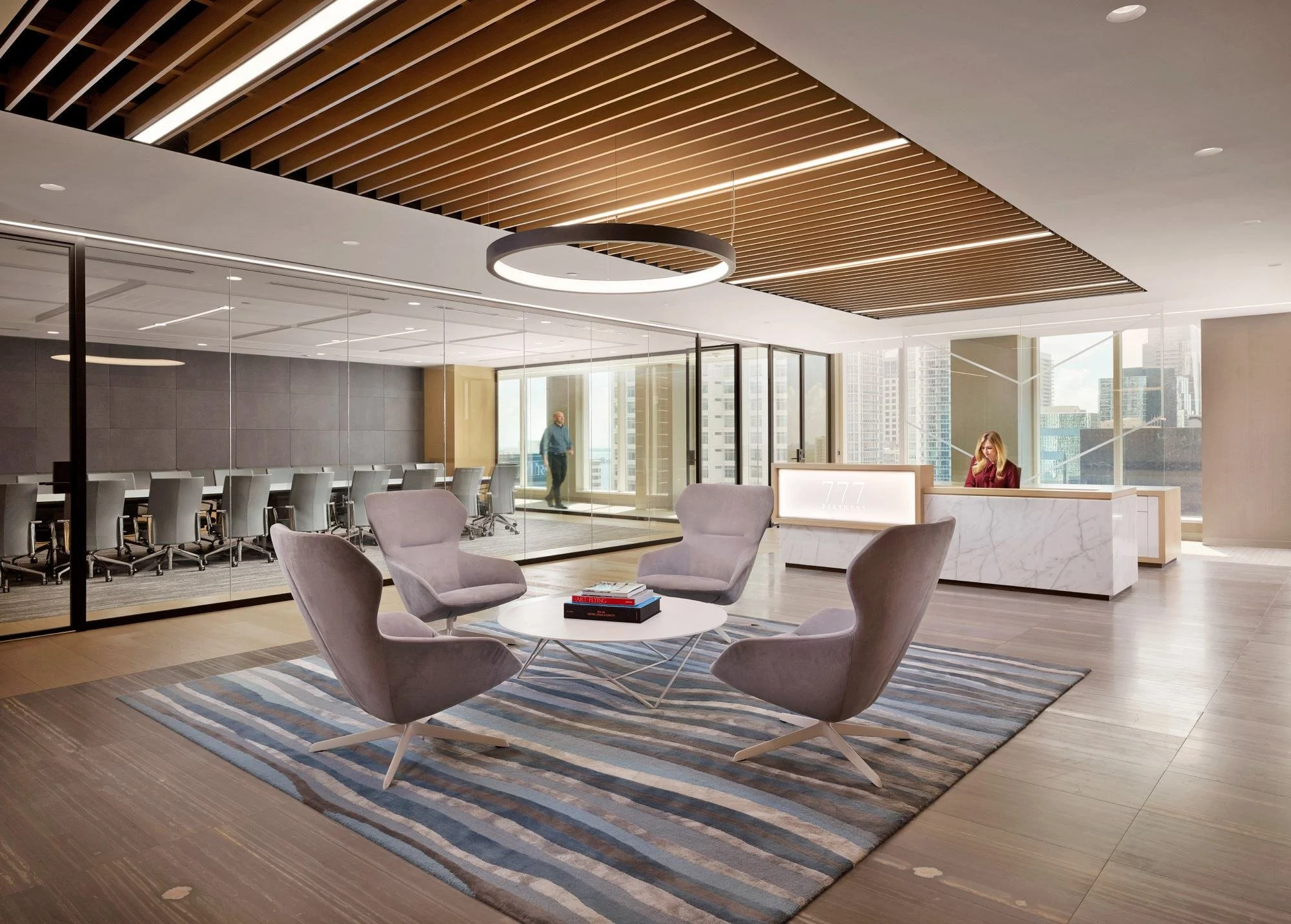
Custom area rugs can be particularly effective in executive offices, reception lounges, private meeting spaces, and other areas where designers want to define a furniture grouping without covering the entire floor.
They also provide an opportunity to introduce richer texture or more detailed design into spaces that may otherwise use stone, wood, porcelain, or another hard flooring material.
Scale is critical.
A rug should relate properly to the furniture arrangement and architecture rather than floating awkwardly in the middle of the room. In a large executive office or reception lounge, the right dimensions can visually anchor the entire space.
Proper area rug size and placement becomes especially important in executive offices, reception lounges, and private meeting spaces.
Maintenance Begins with the Design
Maintenance is not particularly glamorous, but neither is replacing carpet prematurely.
Color and pattern selection can influence how flooring looks between cleaning cycles. Highly exposed light colors may reveal soil more readily, while extremely dark colors can make lint and debris surprisingly visible. Patterned designs often provide more forgiveness in busy circulation areas.
Entry systems matter, too. A significant amount of soil enters a building on people's shoes, making properly designed walk-off areas an important part of protecting interior carpet.
For high-traffic corporate environments, thinking about maintenance during specification is considerably easier than discovering the problem after installation.
Plan Carpet Around Furniture, Not After It
Boardroom tables aren't getting any smaller.
Neither are executive desks, conference tables, lounge arrangements, and collaborative furniture systems.
Carpet layouts should be coordinated with furniture plans early enough to ensure that patterns, borders, area rugs, and transitions land where they are supposed to.
This becomes especially important with custom carpet and rugs. A beautifully designed border isn't particularly successful if half of it disappears beneath a conference table or collides awkwardly with a doorway.
Early coordination gives designers control over scale and placement rather than leaving those decisions to chance.
What About Axminster Carpet in Corporate Offices?
Axminster carpet can be an excellent option for certain corporate environments, particularly when custom pattern capability, durability, and long-term appearance are priorities.
But it isn't automatically the answer for every office.
That distinction matters.
A high-profile reception area, executive conference facility, or heavily trafficked corporate public space may justify a woven construction, while other areas may be better served by different commercial carpet constructions or custom hand-tufted rugs.
The specification should follow the environment, traffic requirements, design objectives, and budget rather than starting with a predetermined product.
Think Beyond Installation Day
Corporate interiors change.
Companies grow, departments move, furniture gets replaced, and workplace strategies evolve. Flooring selected today may need to work with an interior that looks somewhat different several years from now.
That makes longevity partly a design question.
Extremely trend-driven colors or patterns can date an interior before the carpet itself has reached the end of its useful life. A thoughtful custom design can still have personality without being tied too closely to a passing aesthetic.
Performance matters, but so does designing something people will still want to look at years later.
FAQs
-
The best corporate office carpet depends on traffic levels, maintenance requirements, design objectives, acoustics, and expected service life. Reception areas and busy corridors generally require greater emphasis on durability and appearance retention, while executive offices and boardrooms may allow greater emphasis on texture, comfort, and detailed design.
-
Yes. Commercial carpet selected with appropriate fiber, construction, density, and maintenance requirements can perform successfully in high-traffic corporate areas such as corridors, reception spaces, elevator lobbies, and conference facilities.
-
Executive spaces may use custom broadloom carpet, inset carpet, or custom area rugs depending on the architecture and furniture layout. Because these spaces generally experience less traffic than primary circulation areas, designers often have greater flexibility with texture, materials, and design detail.
-
Yes. Carpet absorbs sound that would otherwise reflect from hard flooring surfaces, helping reduce footfall and ambient noise. It can be particularly useful in boardrooms, conference rooms, executive offices, corridors, and collaborative areas.
-
Yes. Custom carpet can incorporate corporate colors, geometry, abstract motifs, or other elements inspired by a company's visual identity. Branding does not need to be literal; subtle references often create a more sophisticated and timeless result.
-
Axminster carpet can be appropriate for high-profile or high-traffic corporate environments where durability, custom pattern capability, and appearance retention are priorities. However, the appropriate construction should always be selected according to the requirements of the individual space.
Final Thoughts
A corporate office isn't one environment. It's a collection of spaces doing very different jobs.
The boardroom needs to feel composed and comfortable. Reception needs to make an impression while handling steady traffic. Corridors need to perform day after day. Collaborative spaces need to support activity without adding unnecessary noise.
Good carpet specification recognizes those differences.
By considering traffic, acoustics, maintenance, pattern, furniture layouts, and long-term appearance from the beginning, designers can create corporate interiors that perform as professionally as the companies occupying them.
And if nobody walks into the office and immediately starts talking about the carpet? That's not necessarily a failure.
Sometimes the best flooring is the flooring that makes everything around it look better.
Planning a Corporate Interior?
Explore custom carpet and area rug solutions for executive offices, boardrooms, reception areas, conference spaces, and other high-traffic commercial environments.

Royal American Carpets designs and manufactures custom high-end carpets and rugs for hotels, clubs, residences, and beyond. Crafted to last, built to impress.
SECTORS SERVED: