Why Scale Matters More Than Most People Realize
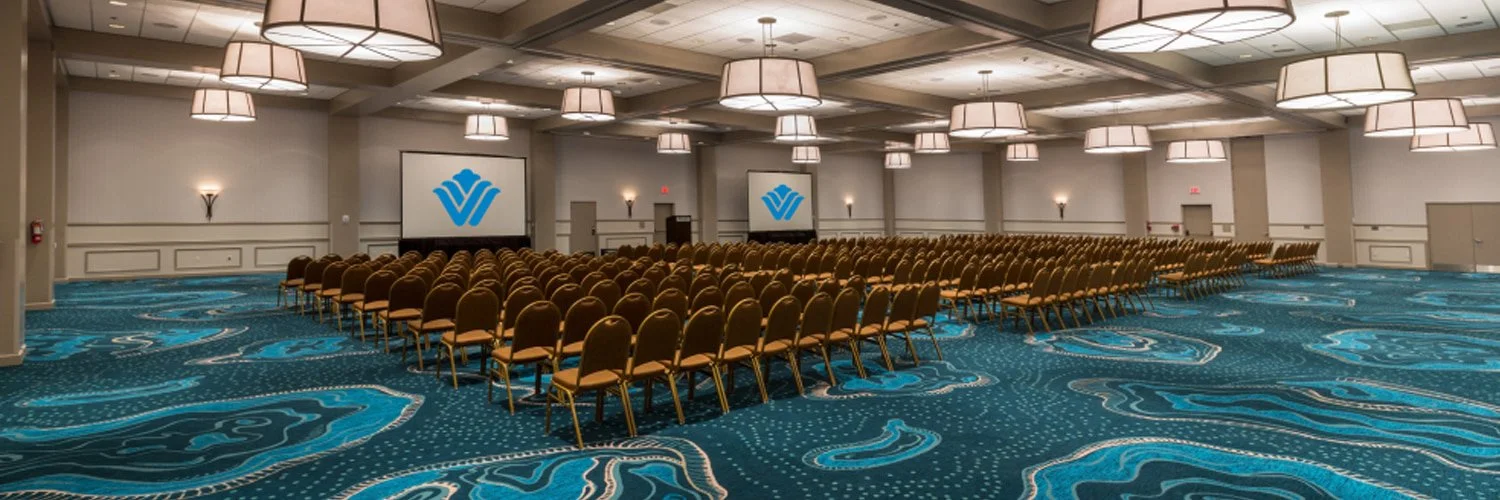
A custom carpet or custom rug pattern can look perfect on a sample strike-off and completely different once it is installed across a 4,000-square-foot ballroom.
That is the challenge of pattern scaling.
In hospitality and large public environments, flooring is experienced differently than it is in smaller spaces. Guests move through the environment, view the floor from multiple angles, and interact with the design at a much larger visual scale.
Patterns that are too small can disappear. Patterns that are too large can overwhelm the space or lose definition entirely.
Getting scale right is one of the most important and overlooked parts of flooring design.
What Pattern Scaling Actually Means
Pattern scaling refers to how the size and proportion of a design interact with the dimensions of a space.
A pattern that works beautifully in a boutique lounge may not translate effectively into:
a ballroom
a hotel lobby
a long corridor
a casino
As the environment grows, the flooring pattern needs to maintain visual balance without becoming repetitive, chaotic, or visually flat.
This is where scaling becomes critical.
Why Large Public Spaces Behave Differently
Large hospitality environments create unique design conditions.
Ballrooms, convention spaces, and hotel lobbies often include:
long sightlines
open floor plans
large uninterrupted spans of flooring
varying lighting conditions
Because of this, flooring patterns are rarely experienced up close alone. They are viewed from a distance and across broad visual fields.
This changes how scale, repetition, and movement are perceived.
A pattern that feels dynamic in a small sample may feel busy when repeated hundreds of times across a ballroom floor. This is one reason woven Axminster carpet continues to be widely used in hospitality environments where large-scale custom patterning and visual continuity are important.

The Relationship Between Scale and Visual Flow
Good pattern scaling helps guide movement through a space.
In hospitality environments, flooring often contributes to:
circulation flow
zoning
spatial rhythm
visual orientation
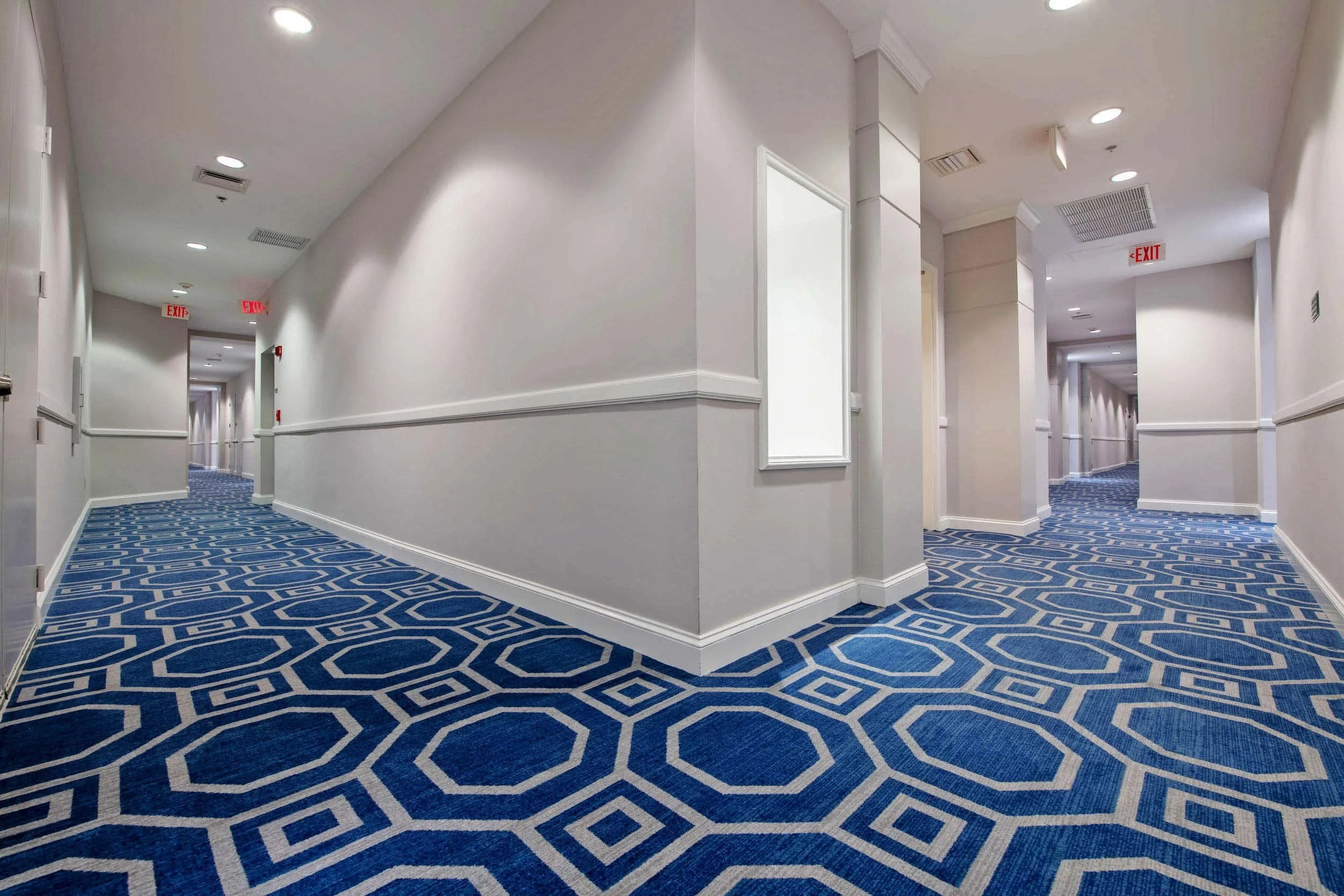
Large-scale patterns can create a sense of energy and movement when properly proportioned. Smaller-scale patterns may create texture and subtlety but can sometimes become visually static in oversized environments.
The key is balance.
The goal is not simply to make the pattern bigger. It is to ensure the scale supports the architecture and function of the environment.
Why Repetition Matters
One of the fastest ways for a flooring design to lose impact is through obvious repetition.
In large public spaces, repeated motifs become much more noticeable over distance. Designers often work to reduce visible pattern repeats by:
increasing scale variation
layering texture and movement
softening transitions within the design
This helps the flooring feel more natural and less mechanically repeated across the environment.
In hospitality interiors, subtle variation often creates a more sophisticated visual experience.
Certain custom flooring constructions, including woven Axminster carpet, are particularly well suited for large-scale patterning because they allow for significant design flexibility and controlled pattern variation across expansive spaces.
Color and Contrast Play a Major Role
Pattern scale is closely tied to color distribution and contrast.
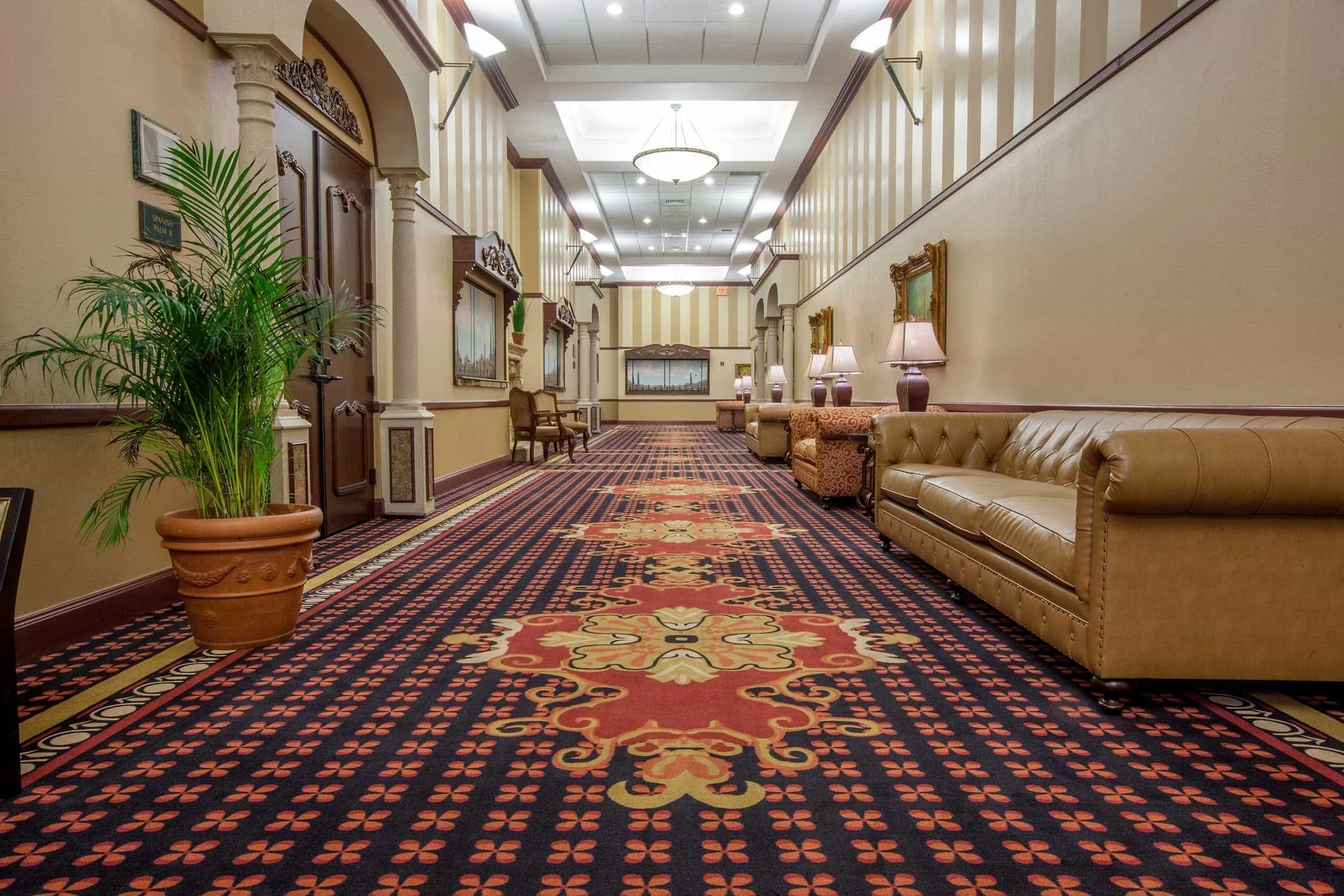
High-contrast patterns can appear more active and visually dominant, particularly at large scale. Lower-contrast designs may feel calmer and more integrated into the architecture.
Color variation can also help conceal:
traffic patterns
wear
staining
maintenance transitions over time
This becomes especially important in high-traffic hospitality environments where flooring performance and appearance retention work together.
Balancing Design with Performance
Large-scale flooring designs still need to function in demanding environments.
Hotel lobbies, ballrooms, lounges, and public circulation areas experience:
continuous foot traffic
furniture movement
event turnover
maintenance cycles
This means flooring design decisions are rarely based on aesthetics alone.
Construction quality, density, and long-term appearance retention remain critical, particularly in custom hospitality applications and quality rugs where the flooring becomes part of the identity of the space. In hospitality environments, woven Axminster and custom hand-tufted constructions are often selected not only for durability, but also for their ability to support highly customized large-scale designs.
How Designers Evaluate Scale Before Production
Pattern scaling is rarely finalized from a small sample alone.
Design teams often review:
digital renderings
enlarged mockups
scaled repeats
full-layout visualizations
This helps determine whether the pattern maintains the right balance once installed across the actual dimensions of the environment.
A design that feels refined at full scale typically performs much better visually after installation.
Why Large-Scale Flooring Design Is Both Technical and Artistic
Successful hospitality flooring is rarely accidental.
Large-scale patterning requires:
technical planning
spatial awareness
understanding of traffic flow
visual restraint
The most effective flooring designs are often the ones that feel natural within the space while quietly supporting the overall atmosphere and architectural intent.
That balance is what separates functional flooring from truly integrated design.
FAQs
-
Pattern scaling refers to how the size and proportion of a flooring design interact with the dimensions of a space, particularly in large hospitality and public environments.
-
Large public spaces create long sightlines and repeated visual fields. Proper scaling helps patterns maintain balance, movement, and visual consistency throughout the environment.
-
Yes. Pattern variation, texture, and color movement can help reduce the visibility of traffic patterns and appearance changes in high-traffic environments.
-
Design teams often use digital renderings, enlarged mockups, and scaled layout visualizations to evaluate how patterns will appear once installed across large spaces.
-
Absolutely. Pattern scale, movement, contrast, and repetition all influence how guests perceive the energy, flow, and atmosphere of a space.
Final Thoughts
Pattern scaling is about far more than enlarging a design.
In hospitality and large public environments, flooring patterns shape how a space feels, flows, and performs visually over time. The most successful designs are the ones that balance scale, movement, architecture, and functionality without overwhelming the environment itself.
When done correctly, large-scale flooring becomes part of the experience of the space rather than simply a surface beneath it.

Royal American Carpets designs and manufactures custom high-end carpets and rugs for hotels, clubs, residences, and beyond. Crafted to last, built to impress.
SECTORS SERVED: