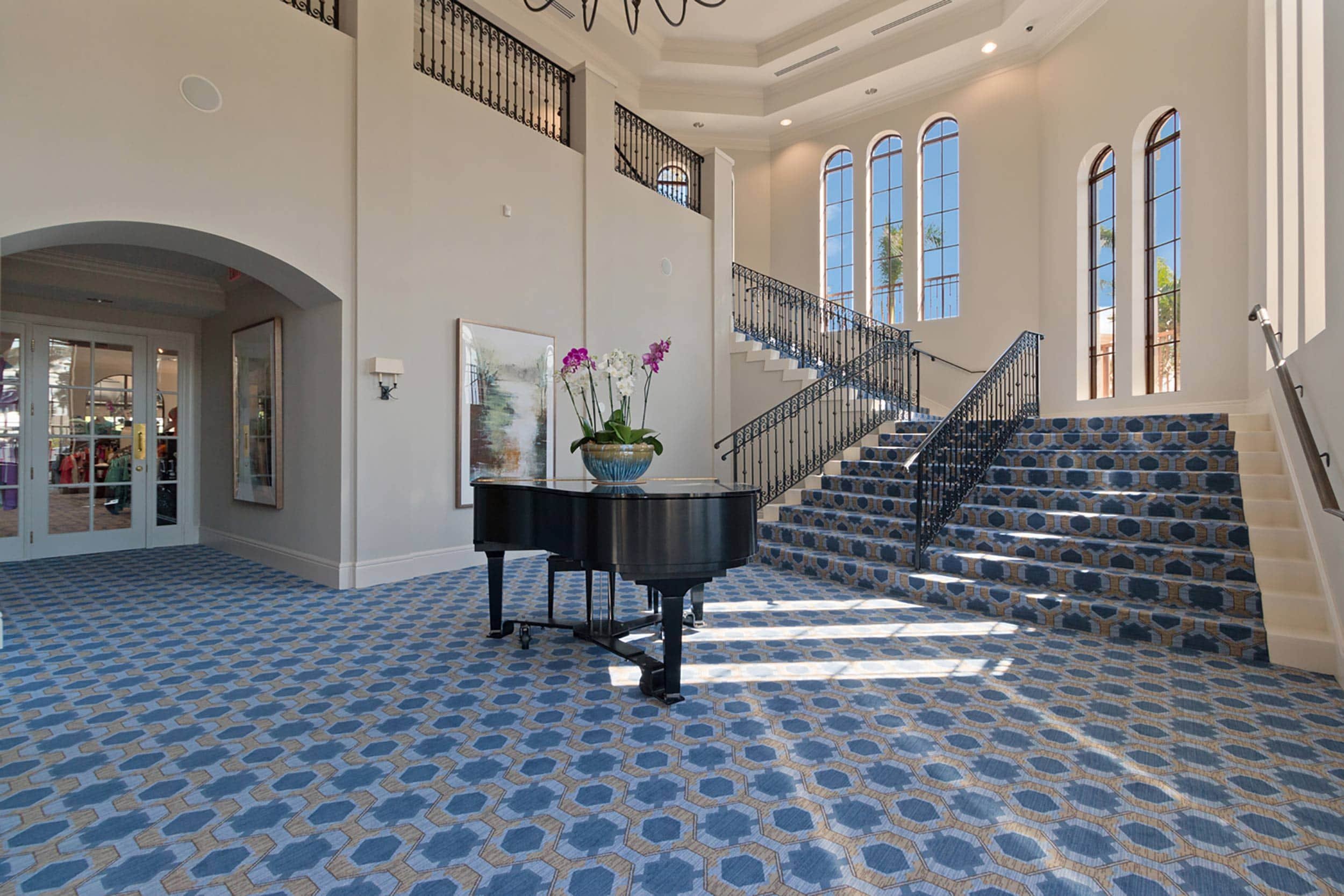
Why Flooring Often Defines the Atmosphere Before Anything Else
In hospitality environments, guests begin forming impressions long before they reach a check-in desk or settle into a space.
Lighting, materials, acoustics, and layout all contribute to the experience, but flooring often plays one of the largest visual roles in shaping how an environment feels.
Custom carpet patterns do more than fill a floor plane. They influence:
mood
movement
visual rhythm
spatial identity
In many hospitality environments, the flooring becomes part of the personality of the space itself.
Brand Identity Is Not Just a Logo
Hospitality branding rarely lives in signage alone.
Hotels, clubs, lounges, and public gathering spaces often use interior materials to reinforce:
atmosphere
tone
guest expectations
emotional response
A luxury hotel resort may aim for calm and layered sophistication. A boutique hotel may lean into energy, movement, and visual contrast. A private club may prioritize timelessness and restraint.
Flooring patterns help communicate those ideas in a way guests experience subconsciously.
Why Carpet Patterns Carry So Much Visual Weight
In large hospitality environments, flooring occupies a tremendous amount of visual real estate.
Lobbies, ballrooms, corridors, lounges, and meeting spaces often feature expansive uninterrupted flooring surfaces. Because of this, carpet patterns naturally become part of the architectural language of the environment.
A well-designed pattern can:
guide visual flow
reinforce branding themes
support spatial zoning
create rhythm and movement throughout a property
When poorly considered, flooring can feel disconnected from the identity of the space itself.
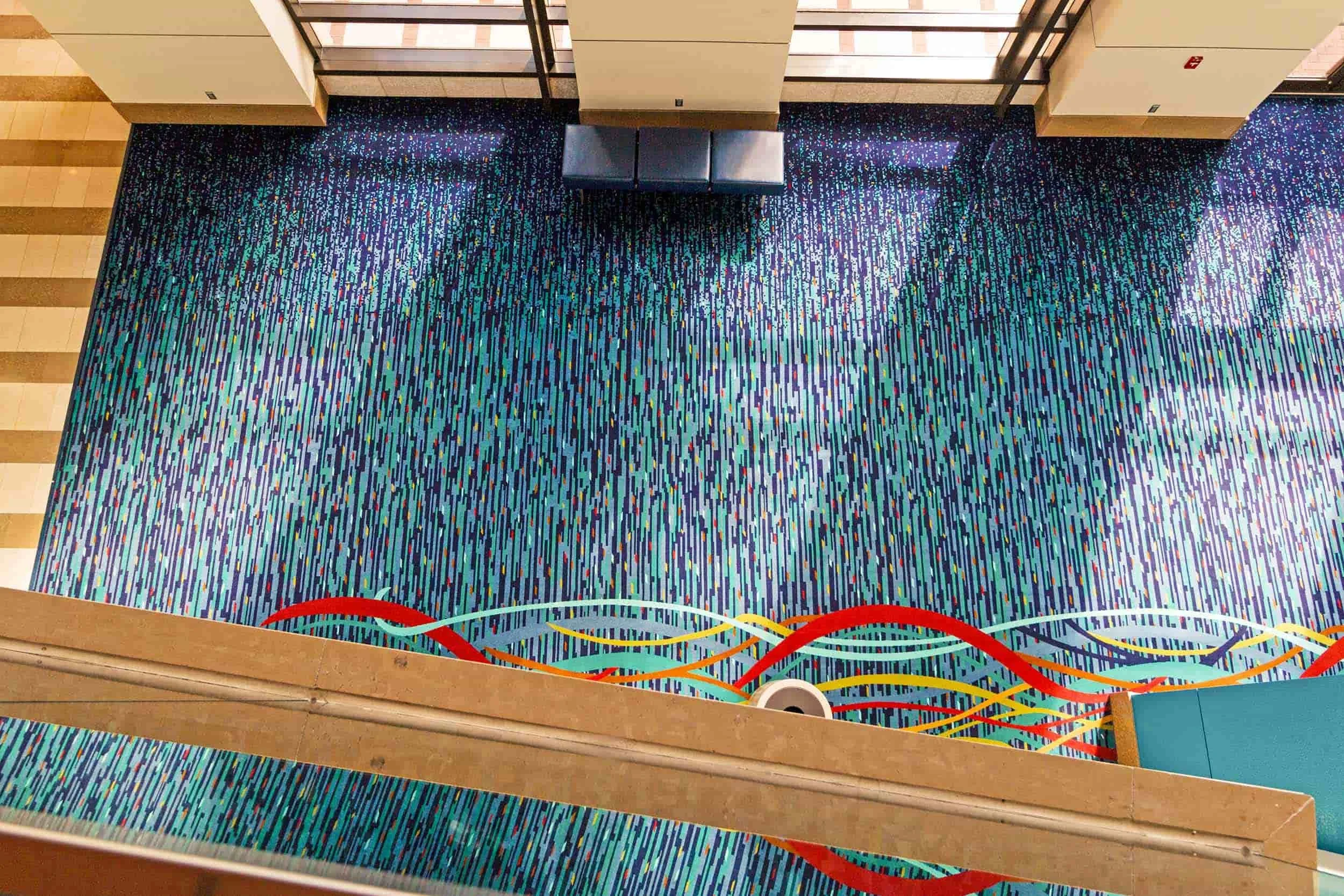
Custom Patterning Creates Design Flexibility
One reason custom flooring remains so important in hospitality design is flexibility.
Custom carpet and rug patterns allow designers to:
coordinate with architectural finishes
reinforce color palettes
introduce movement and scale
create visual distinction between environments
This becomes particularly important in hospitality settings where multiple spaces need to feel connected while still maintaining their own individual character.
How Scale and Repetition Influence Guest Perception
Pattern scale changes how a space is experienced.
Large-scale patterns often create:
movement
drama
energy
More restrained patterns may create:
calmness
subtle texture
visual quietness
Repetition also plays an important role. Obvious repeats can make large public spaces feel mechanical, while layered variation tends to create a more sophisticated and natural visual flow.
This is one reason hospitality flooring design requires careful evaluation at full scale rather than through small samples alone.
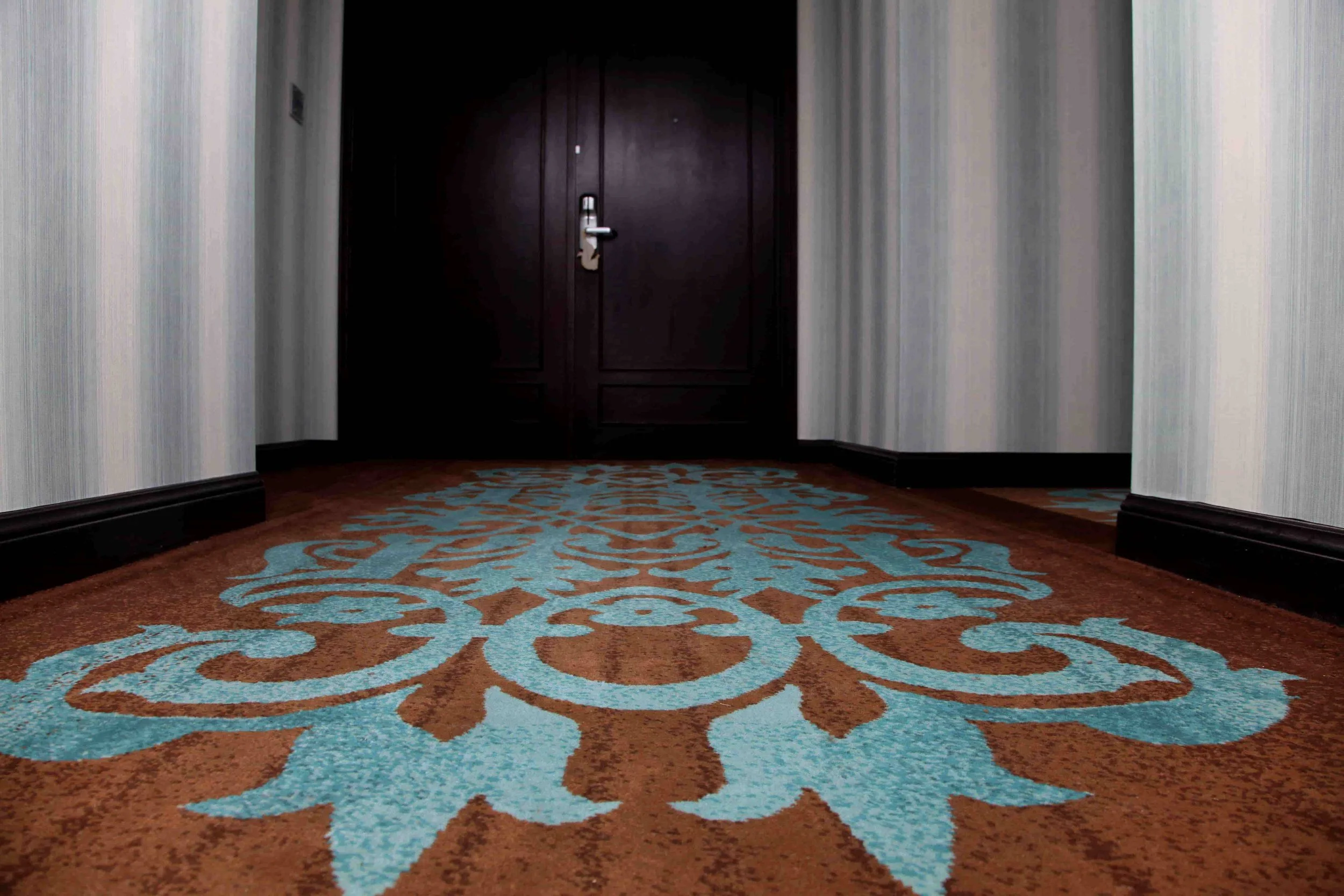
Why Hospitality Flooring Must Balance Design and Performance
Hospitality flooring does not exist in controlled showroom conditions.
Lobbies, ballrooms, lounges, casinos, and public circulation areas experience:
continuous foot traffic
rolling loads
maintenance cycles
furniture movement
This means custom flooring patterns must perform as well as they look.
Woven Axminster carpet continues to be widely used in hospitality environments because it supports highly customized large-scale patterning while maintaining long-term durability in demanding commercial settings.
Custom hand-tufted rugs are also frequently specified in hospitality lounges, gathering spaces, luxury residential interiors, and feature areas where design flexibility and visual impact are priorities.
Why Cohesion Matters Across a Property
One of the strongest hospitality environments feels intentional from space to space.
Flooring patterns often help create continuity between:
lobbies
corridors
lounges
meeting spaces
guest gathering areas
This does not necessarily mean every space uses the same design. Instead, successful properties often use coordinated pattern language, color movement, and visual rhythm to maintain a cohesive identity throughout the environment.
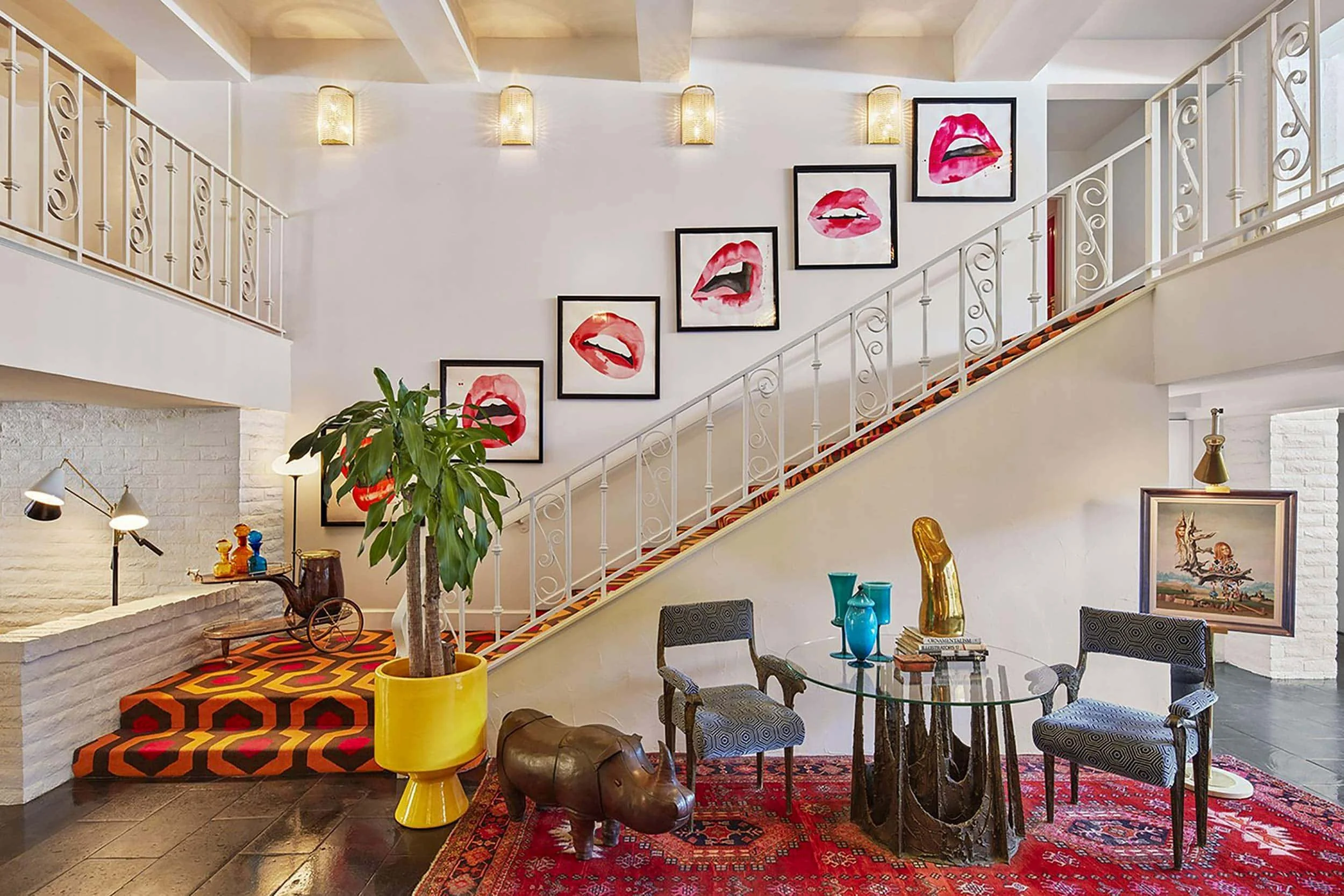
Color and Contrast Shape Emotional Response
Color distribution within flooring patterns can dramatically influence how guests perceive a space.
Warmer palettes often feel:
energetic
social
inviting
More restrained palettes may feel:
calm
refined
intimate
Contrast also affects visual energy. High-contrast designs tend to feel more active and expressive, while softer transitions create a quieter and more integrated atmosphere.
These decisions influence not only aesthetics, but the emotional experience of the environment itself.
How Designers Evaluate Custom Flooring Concepts
Hospitality flooring is rarely finalized through small samples alone.
Design teams often evaluate:
digital renderings
scaled layouts
pattern repeats
full-room visualizations
This helps ensure the flooring interacts properly with:
architecture
lighting
furniture layouts
guest movement patterns
Successful hospitality flooring design requires both technical planning and visual restraint.
FAQs
-
Custom carpet patterns help shape atmosphere, reinforce brand identity, and create visual cohesion throughout hospitality environments such as hotels, clubs, lounges, and public spaces.
-
Pattern scale, color movement, repetition, and contrast all influence how guests emotionally experience a space and perceive its atmosphere.
-
Custom flooring allows designers to coordinate patterns, colors, and scale with the architecture and branding of a property while supporting long-term durability in high-traffic environments.
-
Yes. Flooring patterns are often used to visually separate lounges, corridors, gathering areas, and circulation spaces while maintaining overall design cohesion.
-
Woven Axminster carpet and custom hand-tufted rugs are commonly used because they offer both design flexibility and performance in demanding hospitality settings.
Final Thoughts
Hospitality flooring is rarely just a background material.
In large public environments, custom carpet patterns influence how spaces feel, flow, and connect with guests over time. The most successful hospitality interiors are often the ones where flooring quietly reinforces the identity of the property without overpowering the architecture itself.
When design, scale, color, and performance work together, flooring becomes part of the experience rather than simply part of the specification.

Royal American Carpets designs and manufactures custom high-end carpets and rugs for hotels, clubs, residences, and beyond. Crafted to last, built to impress.
SECTORS SERVED: