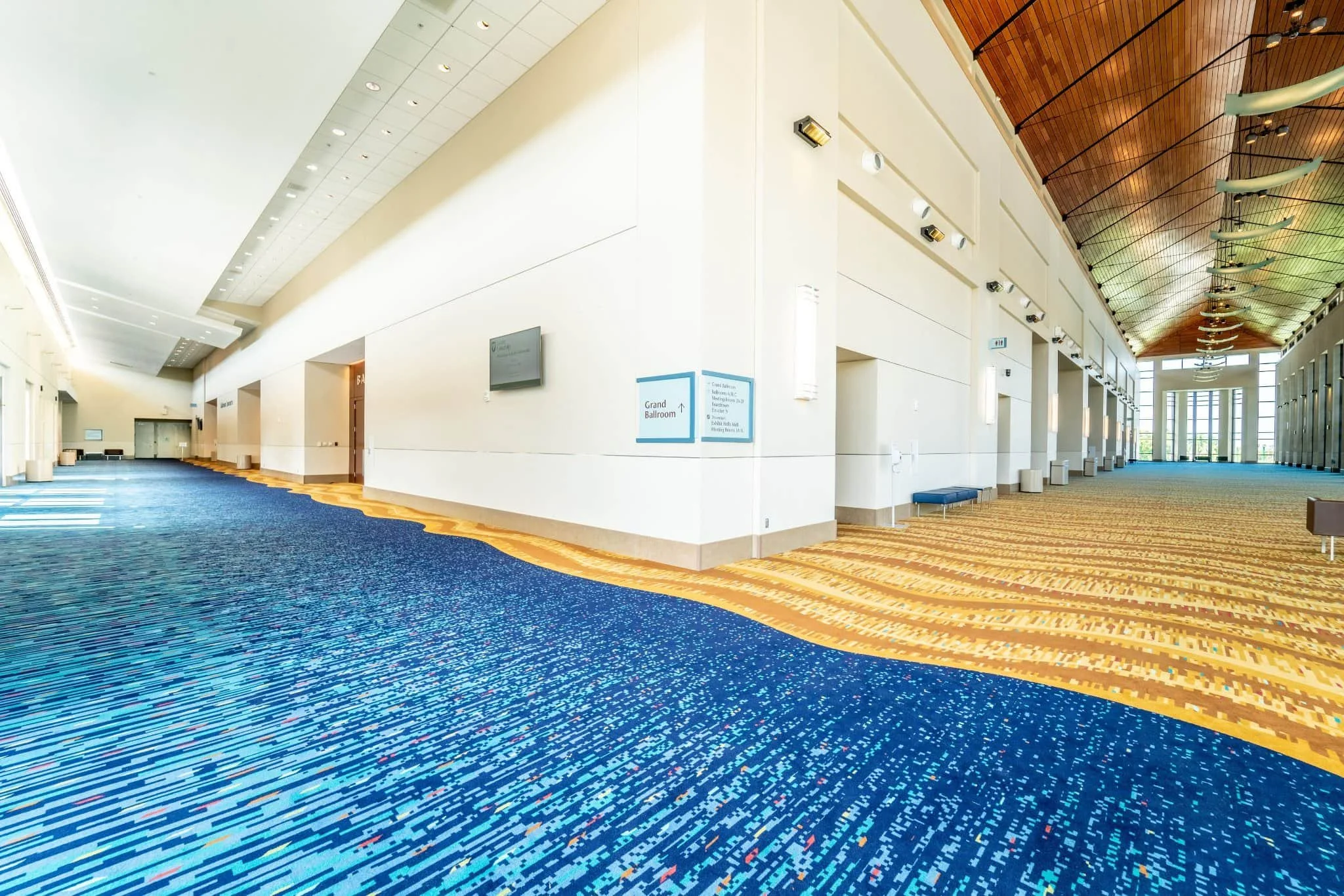
Large Public Spaces Demand More from Carpet
Convention centers rarely sit still.
On any given day, they might host a corporate conference, a trade show, a charity gala, a graduation ceremony, or thousands of visitors attending multiple events simultaneously. Furniture is constantly rearranged, exhibits are rolled into place, and heavy foot traffic flows through the same corridors, meeting rooms, and public spaces from morning until night.
Few flooring materials experience this level of daily use.
That's why selecting commercial carpet for a convention center is about far more than choosing an attractive pattern. It requires balancing aesthetics, durability, maintenance, and long-term performance in one of the most demanding commercial environments imaginable.
When specified thoughtfully, custom carpet helps convention centers remain welcoming, functional, and visually impressive through years of continuous use.
Carpet Plays a Bigger Role Than Most Visitors Notice
Visitors often remember the architecture, lighting, and atmosphere of a convention center, but the carpet quietly supports much of that experience.
It helps establish circulation paths, softens the scale of expansive interiors, improves acoustics, and contributes to the overall identity of the facility. In meeting rooms and ballrooms, carpet also provides comfort underfoot during events that may last several hours.
When designed well, it becomes part of the architecture rather than simply another finish.
This is especially important in facilities where spaces regularly transform from one event to the next.
High-Traffic Performance Is Non-Negotiable
Convention centers experience traffic patterns that many commercial buildings never encounter.
Guests arrive in waves. Registration areas become crowded. Exhibitors transport displays across the floor. Rolling carts, staging equipment, and service vehicles repeatedly cross the same routes.
A carpet specified for this environment should be selected with long-term performance in mind.
Key considerations often include:
Appearance retention
Resistance to crushing
Pattern longevity
Ease of maintenance
Fiber performance
Expected lifecycle
The objective isn't simply to survive heavy traffic—it's to continue looking professional after years of demanding use.
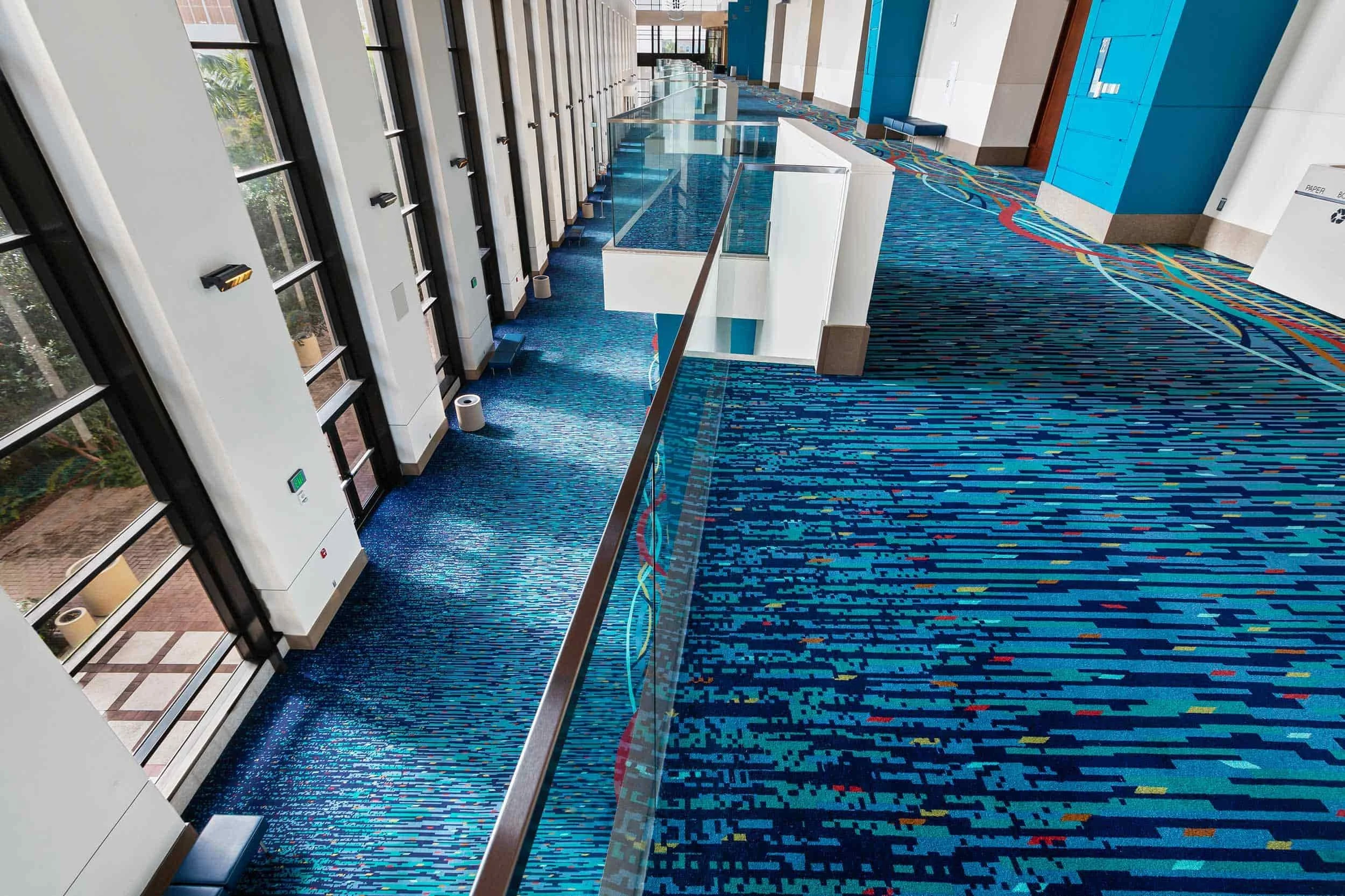
Pattern Scale Matters in Large Open Spaces
One of the biggest differences between convention centers and smaller commercial environments is scale.
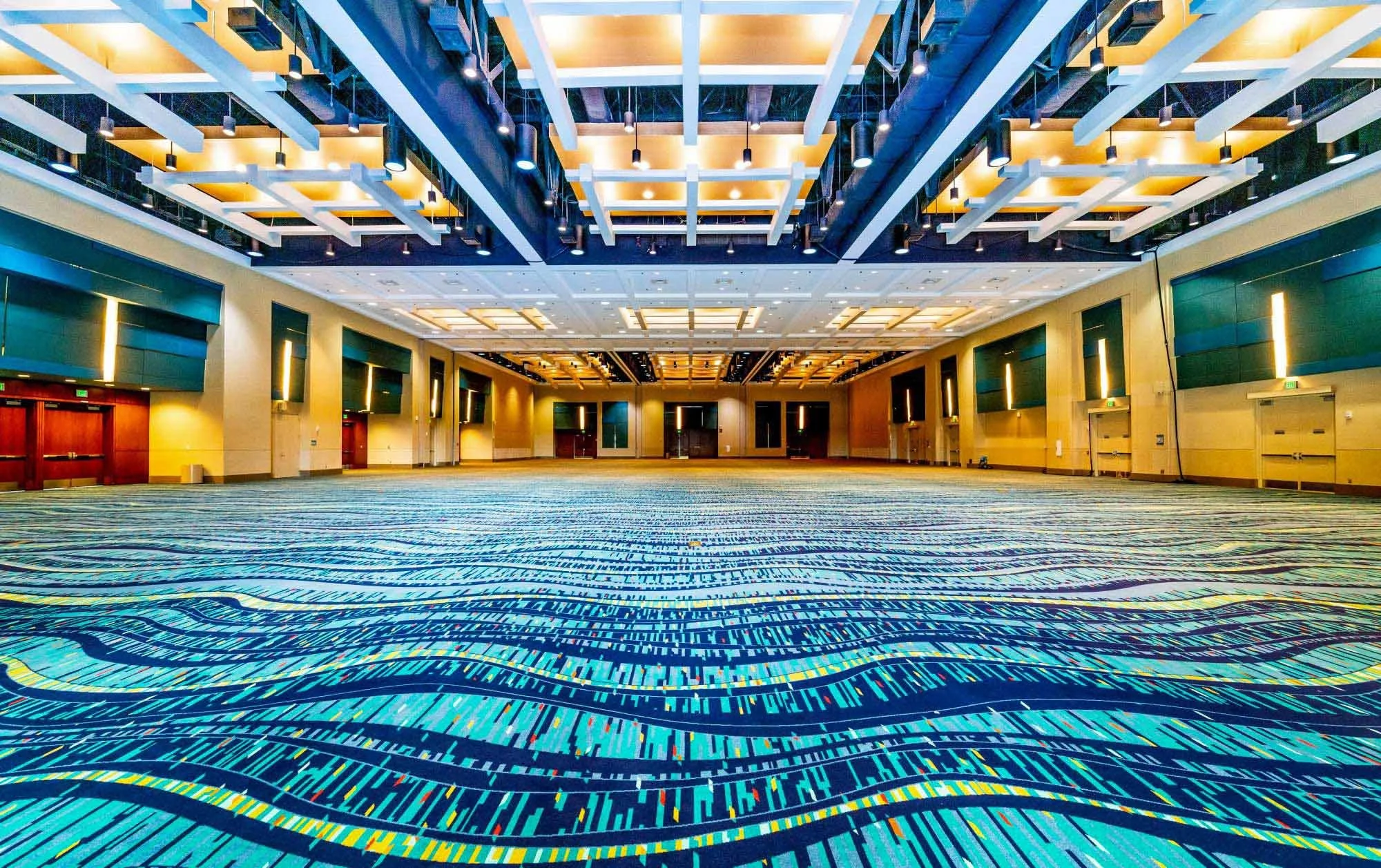
A pattern that works beautifully in a corporate office may appear busy or repetitive across a 40,000-square-foot exhibition hall.
Large public spaces often benefit from designs that create visual movement while maintaining balance across expansive floor areas. Large interiors require careful attention to large-scale carpet patterns so the design remains legible across expansive floor areas.
Designers may use carpet to:
Differentiate functional zones
Guide visitor circulation
Define gathering areas
Complement architectural features
Reduce the visual impact of inevitable wear patterns
When pattern scale is considered early in the design process, the flooring contributes to a more cohesive and intentional environment.
Flexibility Is Essential
Few commercial buildings change as frequently as convention centers.
A ballroom hosting a fundraising dinner on Friday may become an industry trade show on Saturday and a professional conference on Monday.
Because of this flexibility, carpet must complement a wide variety of lighting conditions, furniture layouts, temporary exhibits, and branding elements.
Neutral foundations combined with thoughtfully integrated color and texture often provide the greatest long-term versatility.
Maintenance Should Be Part of the Design Conversation
Even the highest-quality carpet depends on proper maintenance to perform at its best.
Convention centers typically operate on tight event schedules, leaving limited time between functions for cleaning and maintenance.
That's why designers often consider maintenance requirements alongside aesthetics during the specification process.
Important factors include:
Soil concealment
Pattern complexity
Cleaning accessibility
Appearance retention
Replacement planning
Selecting a beautiful carpet is only part of the equation. Choosing one that continues to look exceptional years later is equally important.
Why Many Convention Centers Choose Custom Carpet
Large public venues rarely share the same design objectives.
Some emphasize regional identity. Others reinforce architectural themes or create a distinctive visual experience for visitors.
Custom carpet allows designers to coordinate flooring with the broader interior concept while accommodating the performance requirements unique to convention centers.
Depending on the project, constructions such as custom Axminster carpet may be considered for their pattern capability, appearance retention, and suitability for demanding public interiors.
Planning for Long-Term Performance
Replacing carpet in a convention center is rarely a simple undertaking.
Installations often need to be phased around event calendars, coordinated with other renovations, and carefully scheduled to minimize disruption.
For that reason, many project teams evaluate flooring based on long-term lifecycle value rather than initial cost alone.
A carpet that maintains its appearance, supports efficient maintenance, and complements the facility for years can provide significant value throughout its service life.
Real-World Applications
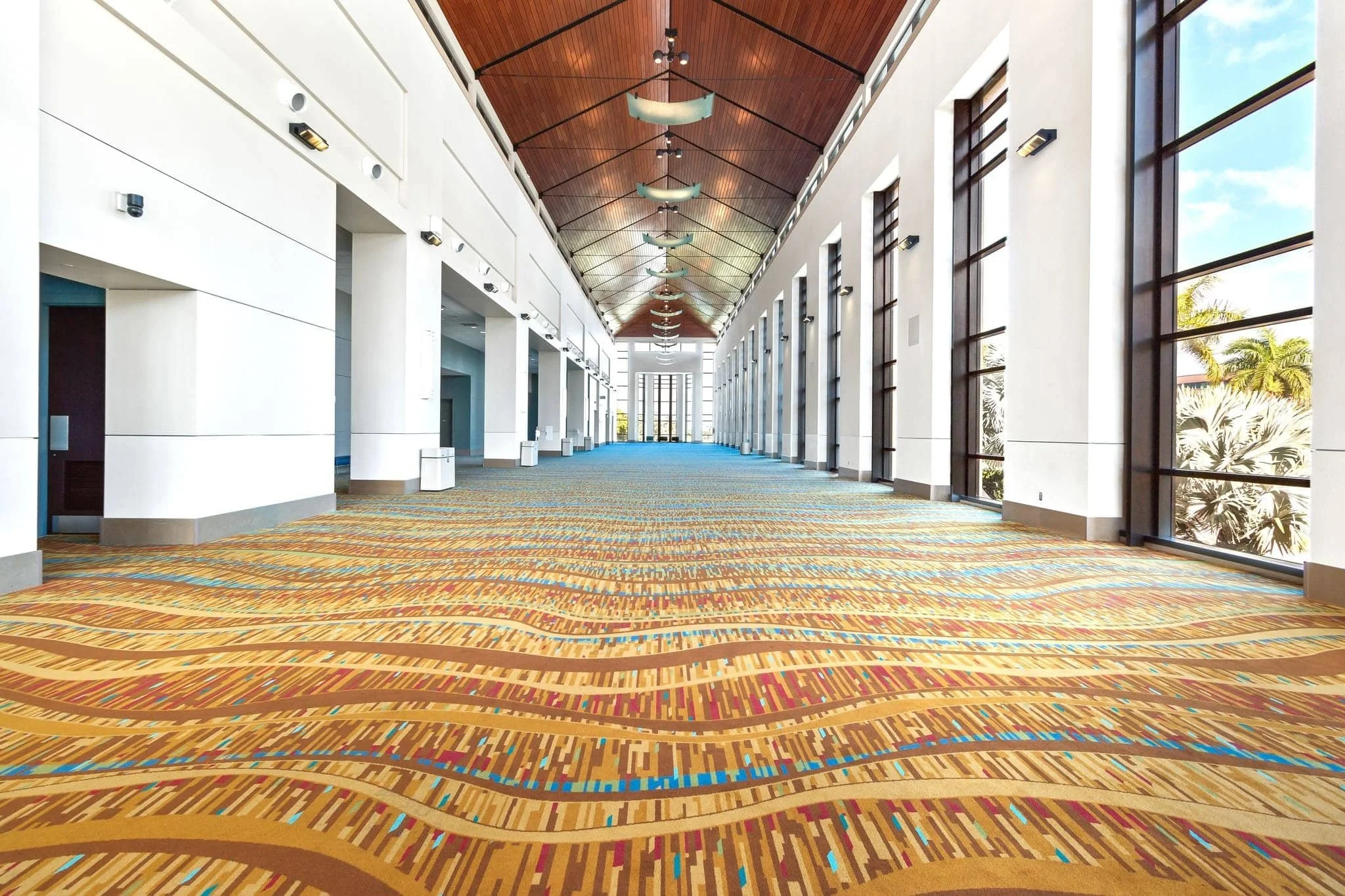
Royal American Carpets has designed and manufactured custom carpet for a wide range of hospitality and commercial environments, One example is our work for the Palm Beach County Convention Center, where custom flooring helped balance visual impact with the demands of a large public facility.
While every convention center presents unique challenges, the same principles consistently guide successful projects: thoughtful planning, appropriate construction, durable materials, and design that enhances the overall visitor experience.
FAQs
-
Convention centers typically require commercial-grade carpet designed to withstand heavy foot traffic, rolling equipment, and frequent events while maintaining its appearance over time. The appropriate construction depends on each project's design goals, performance requirements, and budget.
-
Patterned carpet helps conceal everyday soil and wear while adding visual interest to large public spaces. It can also define circulation paths, support wayfinding, and complement the surrounding architecture.
-
Replacement schedules vary depending on traffic levels, maintenance practices, and renovation cycles. Many facilities evaluate carpet performance over many years and coordinate replacement with broader renovation projects.
-
Architects and designers typically evaluate traffic levels, pattern scale, maintenance expectations, appearance retention, acoustics, lifecycle value, and coordination with the overall interior design.
-
Yes. Custom carpet allows designers to develop unique patterns, colors, and specifications that reflect the facility's identity while meeting the performance demands of high-traffic commercial environments.
Final Thoughts
Convention centers ask more of their flooring than almost any other commercial environment. From exhibition halls and registration areas to meeting rooms and ballrooms, carpet must withstand continuous activity while contributing to the overall experience of every visitor who walks through the doors.
When design, durability, and long-term performance are considered together, custom commercial carpet becomes more than a finish underfoot—it becomes an integral part of how a convention center functions, performs, and presents itself for years to come.
Planning Carpet for a Large Public Venue?
Explore custom carpet solutions developed for convention centers, ballrooms, meeting facilities, and other high-traffic commercial interiors.

Royal American Carpets designs and manufactures custom high-end carpets and rugs for hotels, clubs, residences, and beyond. Crafted to last, built to impress.
SECTORS SERVED: