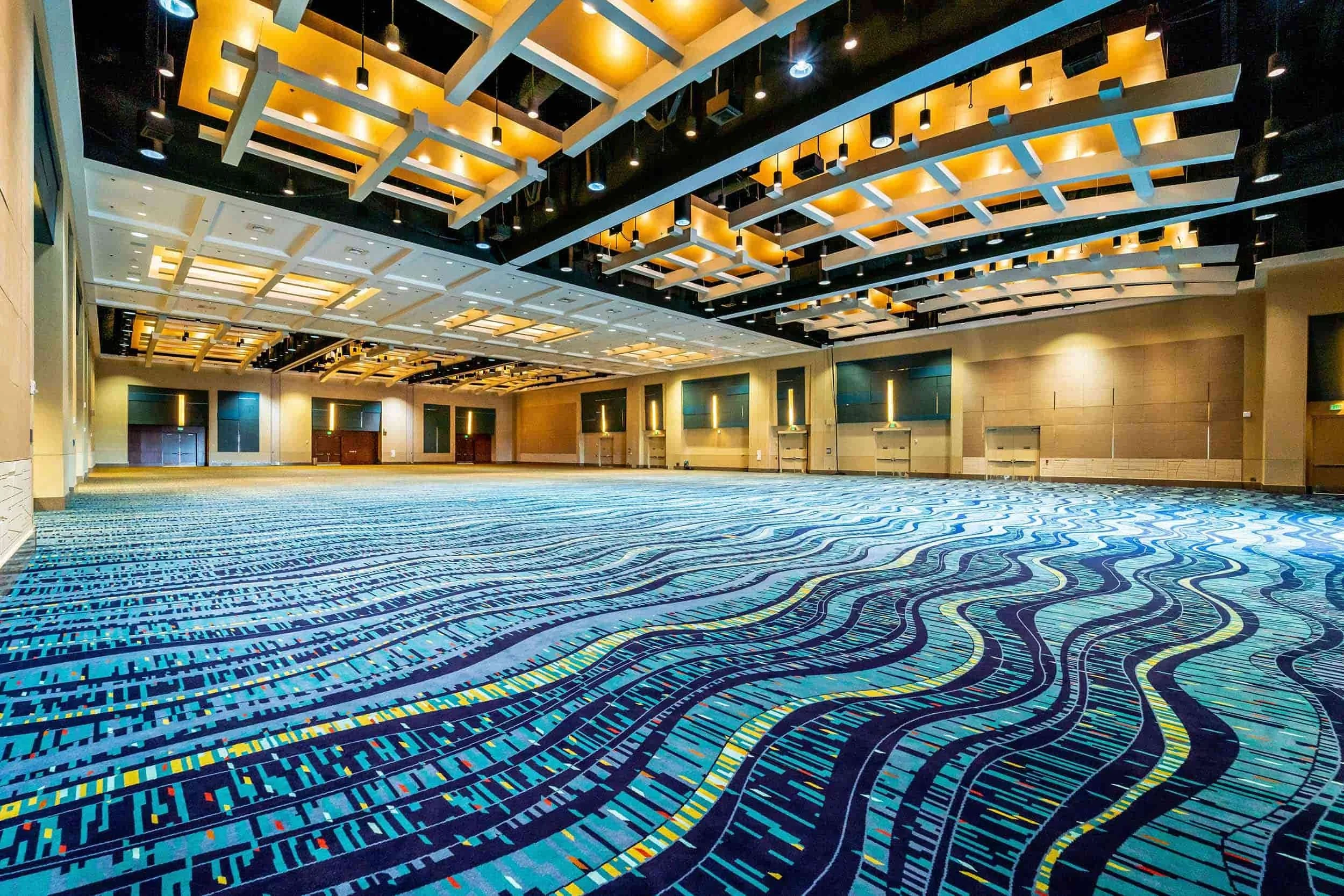
A beautiful interior can look finished and still sound unfinished.
Hard surfaces are everywhere in modern commercial design. Stone, glass, wood, metal, polished concrete, large windows, and open ceilings can create striking spaces, but they also give sound plenty of opportunity to bounce around.
That is where carpet can play a surprisingly important role.
In hotels, restaurants, country clubs, conference spaces, corporate interiors, museums, lounges, corridors, and other public environments, carpet does more than contribute color and pattern. It can also help absorb sound, reduce footfall noise, soften reverberation, and make a space feel calmer and more comfortable.
Acoustics may not be the first thing people notice about a carpet.
They often notice when the room gets it wrong.
Why Acoustics Matter in Commercial Interiors
Sound affects how a space feels almost immediately.
A hotel lobby with too much reverberation can feel chaotic even when the design is elegant. A restaurant can become exhausting if every conversation, chair movement, and clink of glass reflects back into the room. A boardroom can look refined but still make communication harder if voices carry and echo.
In hospitality and commercial interiors, acoustic comfort influences the experience of the space.
That matters in areas where people gather, communicate, relax, dine, work, or move through repeatedly.
Carpet helps because textile surfaces absorb sound energy that would otherwise reflect from harder materials.
It does not solve every acoustic problem by itself, but it can be an important part of the overall strategy.
Carpet Helps Reduce Reflected Sound
The basic principle is straightforward.
Hard, smooth surfaces tend to reflect more sound. Softer, more porous materials tend to absorb more of it.
When sound waves strike a carpeted surface, some of that energy is absorbed into the pile and underlying structure rather than being reflected back into the room.
The result can be less reverberation and a softer acoustic character.
That difference may be especially noticeable in large interiors with a significant amount of hard surface area.
Think about the difference between walking into:
a marble lobby with stone walls and glass
the same lobby with a substantial carpeted area
a restaurant with hard flooring throughout
the same restaurant with broadloom carpet or large area rugs introduced into key zones
The architecture may be identical.
The room will not sound identical.
Footfall Noise Is Part of the Equation Too
Acoustics are not only about voices and reverberation.
Foot traffic matters.
Commercial spaces can generate a surprising amount of impact noise from shoes, rolling luggage, carts, chairs, and repeated movement.
Corridors are a good example.
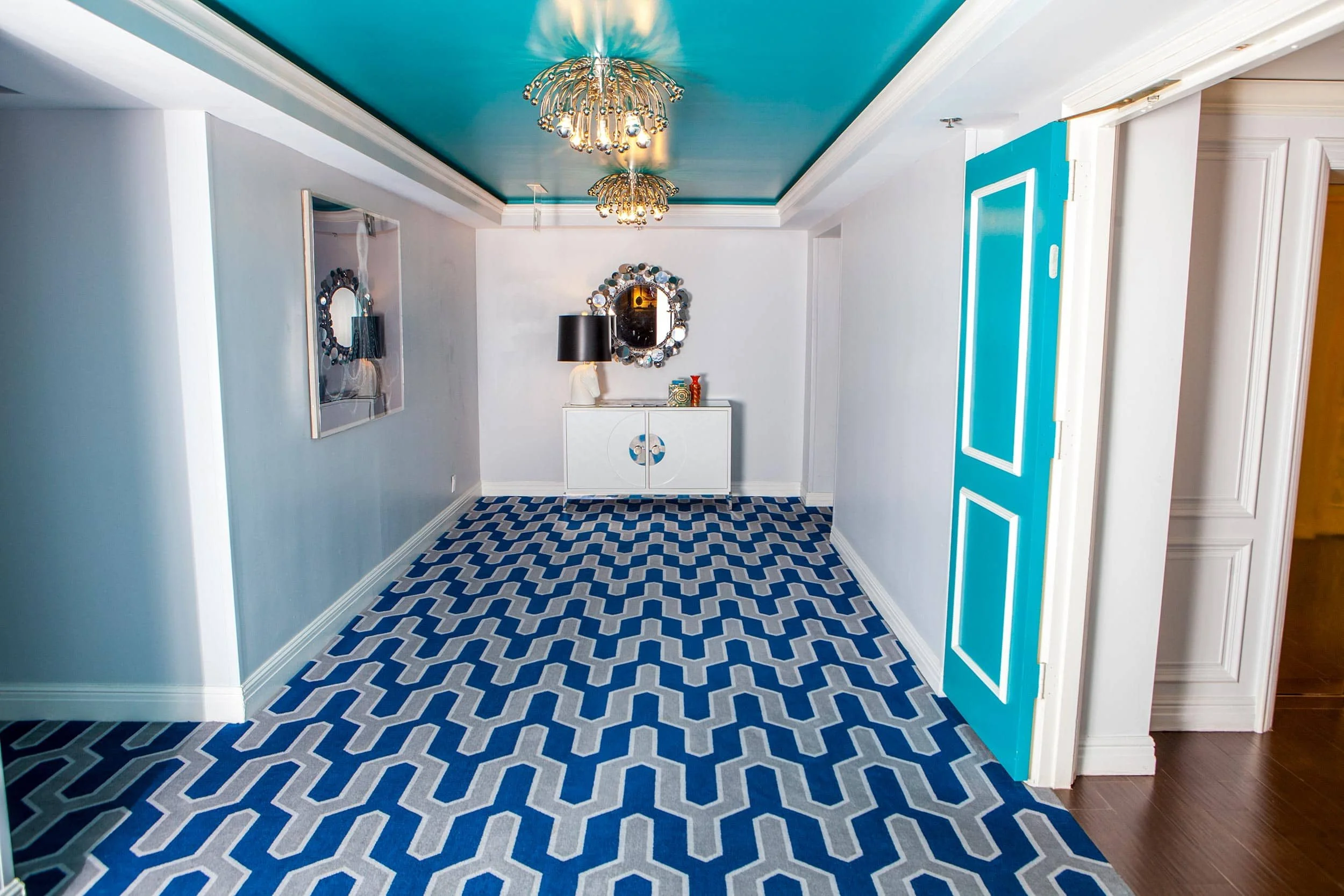
A hotel or condominium hallway with hard flooring can transmit every heel strike and rolling suitcase down the length of the space. Carpet helps dampen those sounds at the source.
The same logic applies to:
hotel corridors
condominium hallways
conference centers
corporate offices
country clubs
hospitality lounges
event spaces
Reducing footfall noise can make the environment feel more controlled and less intrusive, particularly in spaces adjacent to guest rooms, offices, meeting rooms, or private areas.
Why Hospitality Interiors Benefit So Much
Hospitality spaces often combine two competing goals.
They need to feel active and social, but not noisy and overwhelming.
That balance is especially important in hotels, resorts, clubs, restaurants, and lounges where guests may spend extended periods of time.
Hotels and lobbies with hospitality carpet should feel lively without sounding like a train station.
A restaurant should feel energetic without forcing everyone to lean across the table to hear each other.
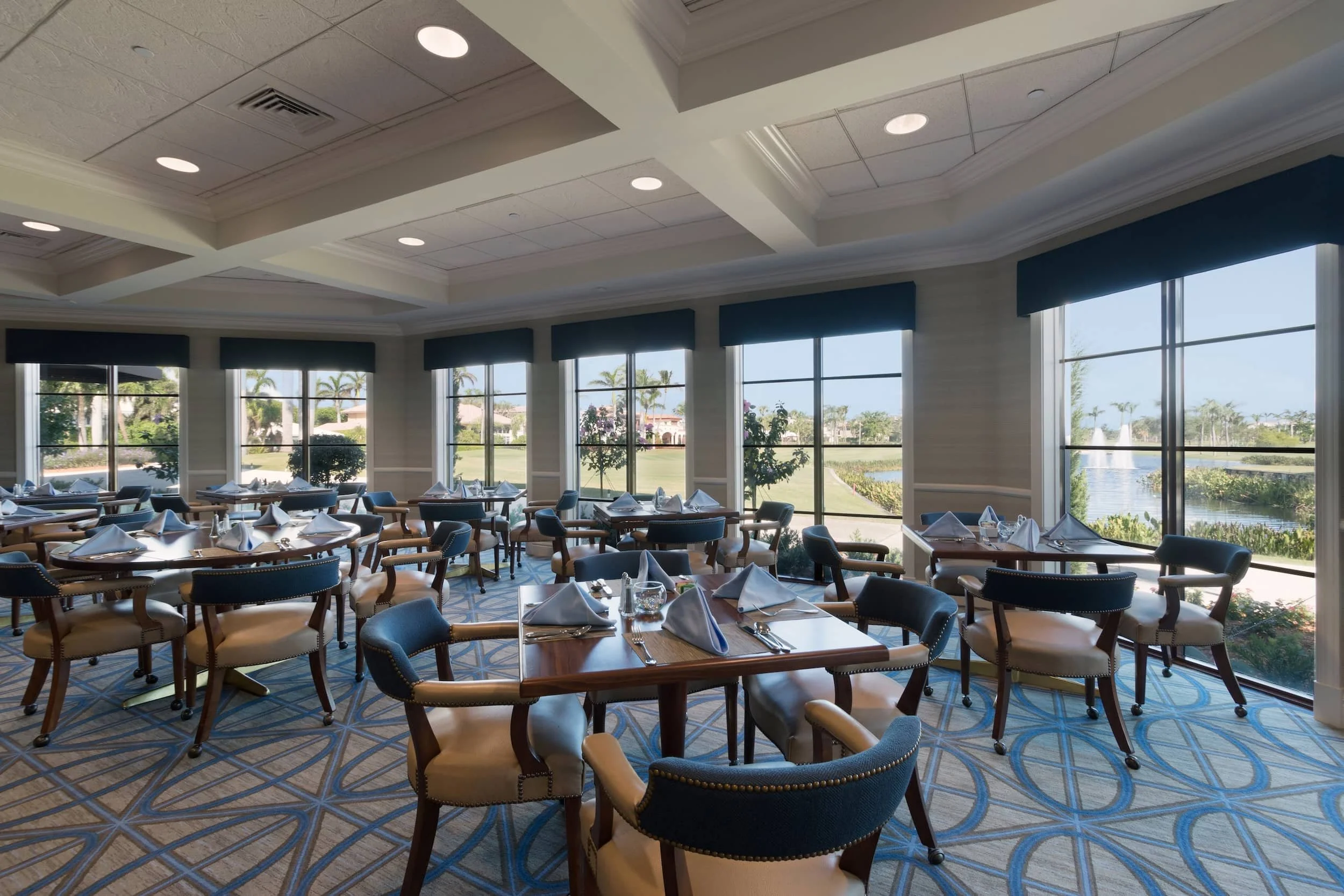
A country club dining room should feel social without turning every conversation into background noise for the entire room.
Carpet contributes to that balance.
It introduces a large absorptive surface directly into the space, often across thousands of square feet.
That scale matters.
Restaurants Are an Especially Good Example
Restaurants are acoustically demanding spaces.
There are voices, dishes, glassware, chairs, service traffic, music, kitchen activity, and often a large amount of reflective material in the interior design.
Hard floors can amplify that activity.
Carpet can help soften the room while also contributing to the visual design.
That does not mean every restaurant should be fully carpeted. Many contemporary interiors intentionally mix materials.
But broadloom carpet, inset carpet, or large custom area rugs can be useful in dining zones where acoustic comfort is a priority.
The added benefit is that patterned carpet can also help support the visual identity of the restaurant while addressing performance needs such as traffic, maintenance, and appearance retention.
Good design rarely solves only one problem at a time.
Area Rugs Can Help in Hard-Surface Interiors
Not every space calls for wall-to-wall carpet.
In some commercial interiors, the architecture may depend heavily on stone, wood, terrazzo, or other hard flooring.
That does not eliminate the opportunity to improve acoustics.
Large custom area rugs can introduce a meaningful amount of soft surface into selected zones while preserving the surrounding hard flooring.
This approach can work especially well in:
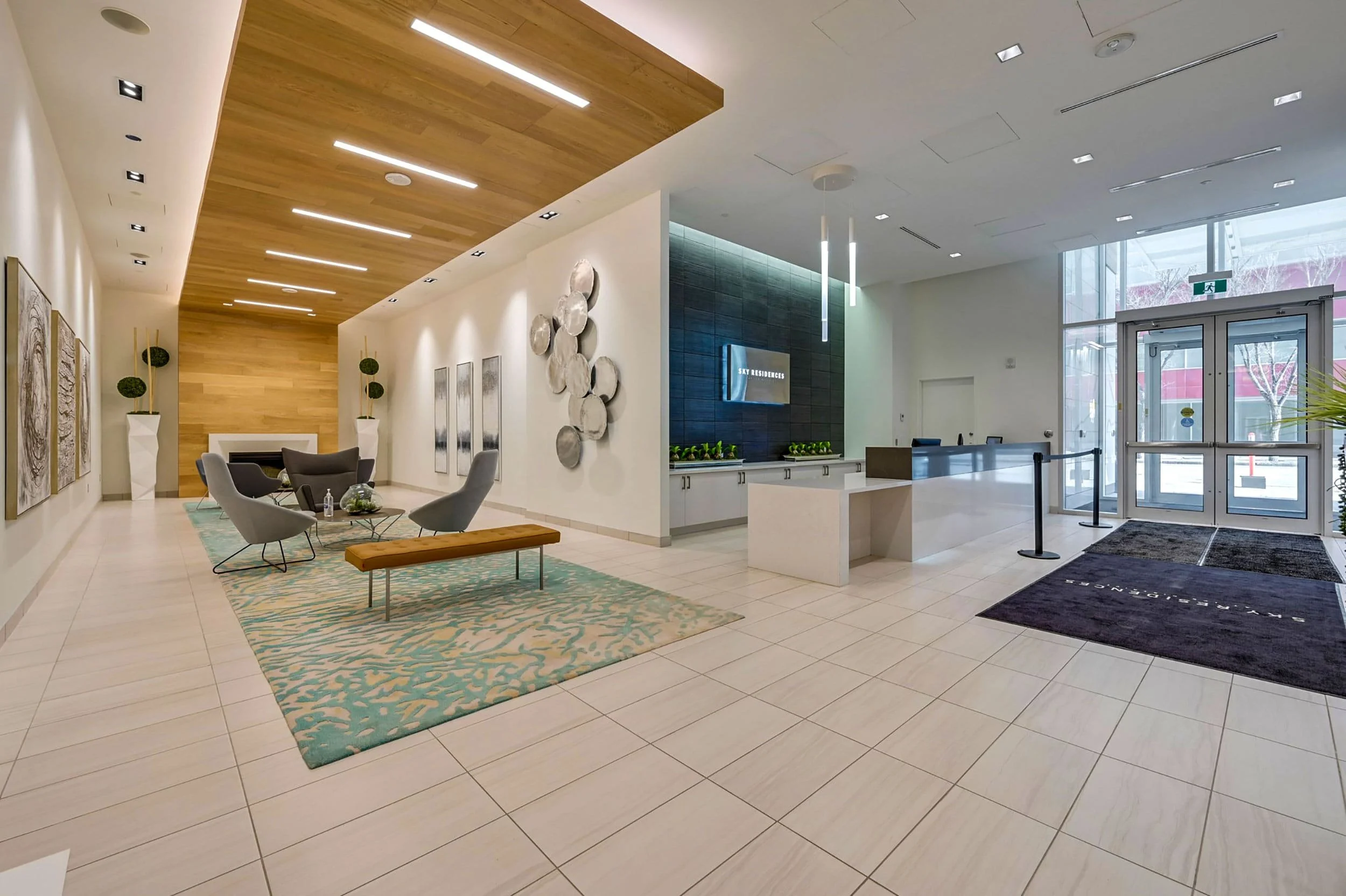
hotel lobbies
executive offices
private lounges
reception areas
clubhouses
condominium amenity spaces
boardrooms
The rug also helps define furniture groupings and create a sense of intimacy within a larger room.
Acoustically, even a partial softening of the space can make a noticeable difference compared with an entirely reflective floor.
Broadloom Carpet Has an Acoustic Advantage of Scale
Broadloom carpet can have a particularly strong acoustic effect because of the amount of surface area it covers.
In a ballroom, corridor, conference area, or large hospitality space, a fully carpeted floor can absorb sound across the entire footprint rather than only within selected zones.
That can help reduce:
footfall noise
chair movement
rolling equipment noise
sound reflection
general ambient noise
For this reason, carpet remains common in spaces where sound control matters even when other hard-surface materials dominate the surrounding architecture.
Why Wool-Rich Axminster Can Work Especially Well for Acoustics
Wool-rich Axminster is often selected for demanding hospitality environments because it combines woven durability, design flexibility, and the natural acoustic benefits of a substantial textile floor covering.
The dense pile and woven construction can help absorb sound and soften footfall noise, while wool itself contributes to a more comfortable acoustic environment than hard flooring surfaces.
That makes wool-rich Axminster particularly well suited to spaces such as hotel corridors, ballrooms, country club dining rooms, lounges, and other high-traffic interiors where designers want both long-term performance and a quieter atmosphere.
As with any carpet, the total acoustic performance depends on the full floor assembly, including backing, underlay, installation method, and the amount of carpeted surface area. But in the right setting, wool-rich Axminster can contribute meaningfully to both acoustic comfort and overall interior quality.
Does Thicker Carpet Always Mean Better Acoustics?
Not necessarily.
Pile height, density, fiber, backing, underlay, and installation method can all influence acoustic performance, but the relationship is not as simple as “thicker is always better.”
A dense carpet with an appropriate backing or cushion system may perform differently from a softer but loosely constructed carpet.
The overall floor assembly matters.
That is important because commercial carpet should still be selected first for the actual demands of the space.
A product that performs well acoustically but is poorly suited to heavy traffic, maintenance, or rolling loads is not automatically the right specification.
The best solution balances acoustic benefit with durability, design, maintenance, and use.
Underlay Can Make a Difference
In some installations, cushion or underlay can further improve acoustic performance.
This can help reduce impact noise and add another layer of sound absorption beneath the carpet.
The appropriate system depends on the carpet construction, installation method, traffic conditions, and project requirements.
Underlay may be useful in settings such as:
executive spaces
hotel suites
boardrooms
lounges
residential-style hospitality areas
In very high-traffic commercial environments, however, the installation system must still be selected for long-term performance.
Acoustics should be part of the decision, not the only decision.
High-Traffic Spaces Still Need the Right Construction
A carpet can help with acoustics and still fail if it is not built for the environment.
That is why acoustic performance has to be considered alongside construction and traffic.
A busy hotel corridor, convention center, ballroom, restaurant, or club dining room requires high-traffic carpet that can withstand repeated use while maintaining its appearance.
The specification should consider:
traffic volume
fiber
pile construction
density
maintenance requirements
rolling traffic
chair movement
pattern and color
acoustic objectives
This is where the broader commercial specification process becomes important.
A quieter carpet that wears poorly is not a better carpet.
Pattern Can Help Acoustically, but Mostly Visually
Pattern itself does not significantly change the acoustic properties of carpet in the way pile structure or floor assembly can.
But pattern matters indirectly.
A successful patterned carpet can help make a large soft-surface installation visually appropriate in spaces where designers might otherwise default to hard flooring.
That is worth noting because large carpeted areas often provide more acoustic benefit than a small rug or isolated textile feature.
If a custom pattern makes broadloom carpet more architecturally desirable, then design and acoustic performance can reinforce each other.
This is one reason custom carpet can be particularly useful in hospitality interiors.
It does not have to look like a compromise made for sound control.
It can look like the design was always intended that way.
Carpet Is Only One Part of Acoustic Design
It is important not to oversell flooring.
Carpet can improve acoustic conditions, but it is only one surface in the room.
Ceilings, wall treatments, drapery, upholstered furniture, acoustic panels, millwork, room volume, and mechanical systems all contribute to how a space sounds.
In a large or acoustically sensitive environment, a qualified acoustic consultant may be involved in the design.
Carpet should be viewed as one component of a broader strategy.
That said, flooring covers an enormous amount of surface area.
Ignoring it would be a mistake.
When Does Acoustic Performance Matter Most?
Some spaces are more acoustically sensitive than others.
Areas where people gather and communicate tend to benefit most from thoughtful sound control.
Examples include:
hotel lobbies
restaurants
country club dining rooms
conference rooms
boardrooms
executive offices
museum galleries
lounges
corridors adjacent to guest rooms
event spaces
In these environments, acoustic comfort can influence how long people stay, how easily they communicate, and how refined the space feels.
That is a meaningful part of the user experience.
Maintenance Still Matters
A carpet's acoustic contribution depends in part on its physical condition.
If pile becomes heavily compacted, damaged, or contaminated, the overall performance of the flooring can change.
That is another reason commercial carpet maintenance programs matter.
Regular vacuuming, appropriate cleaning, and correct traffic management support not only appearance and service life, but the physical integrity of the carpet itself.
Acoustic performance is not separate from long-term maintenance.
Everything is connected.
Don't Treat Acoustics as an Afterthought
Acoustic performance is easiest to address when it is considered during the design phase.
By the time the furniture is installed and the space is open, there may be fewer practical options available.
If a project is expected to have significant sound challenges, the flooring specification should be part of the conversation early.
That includes asking questions such as:
How much hard surface will the room contain?
How large is the space?
Will people be gathering and speaking for long periods?
Is footfall noise a concern?
Are guest rooms, offices, or private areas nearby?
Will broadloom carpet, area rugs, or a mixed-material flooring strategy make the most sense?
Those questions can help shape the flooring plan before acoustic problems become apparent.
FAQs
-
Yes. Carpet absorbs sound that might otherwise reflect from hard flooring surfaces, which can help reduce reverberation, footfall noise, and general ambient noise in commercial interiors.
-
Yes. Carpet is commonly used in hotels because it can help reduce footfall noise, soften corridors and public spaces, and improve overall acoustic comfort in guest-facing environments.
-
Yes. Large area rugs can help absorb sound in rooms with hard flooring, particularly in lounges, reception areas, boardrooms, hotel lobbies, and other seating zones.
-
Carpet can help reduce reflected sound and reverberation, which may reduce the perception of echo. However, room acoustics are influenced by walls, ceilings, furniture, room volume, and other materials as well.
-
Not always. Acoustic performance depends on several factors, including pile structure, density, fiber, backing, underlay, and the overall floor assembly. Thickness alone does not determine performance.
-
Yes. Carpet can significantly soften footfall noise compared with hard flooring, which is especially useful in hotel corridors, condominium hallways, offices, and other high-traffic spaces.
-
Broadloom carpet can provide greater overall sound absorption because it covers more floor area, but area rugs can still make a meaningful difference in selected zones within hard-surface interiors.
-
Yes. In spaces where communication, comfort, and noise control are important, acoustics should be considered alongside durability, maintenance, design, traffic, and construction.
Final Thoughts
Carpet is rarely specified for one reason.
In commercial and hospitality interiors, it can provide color, pattern, comfort, durability, and acoustic benefit at the same time.
That combination is especially valuable in spaces where people gather, communicate, relax, work, or move through continuously.
A well-designed flooring plan will not solve every acoustic challenge by itself.
But it can make a large room feel calmer, a corridor feel quieter, a restaurant feel more comfortable, and a hospitality space feel more refined.
And when acoustics are considered early in the design process, carpet becomes more than a finish.
It becomes part of how the room performs.

Royal American Carpets designs and manufactures custom high-end carpets and rugs for hotels, clubs, residences, and beyond. Crafted to last, built to impress.
SECTORS SERVED: