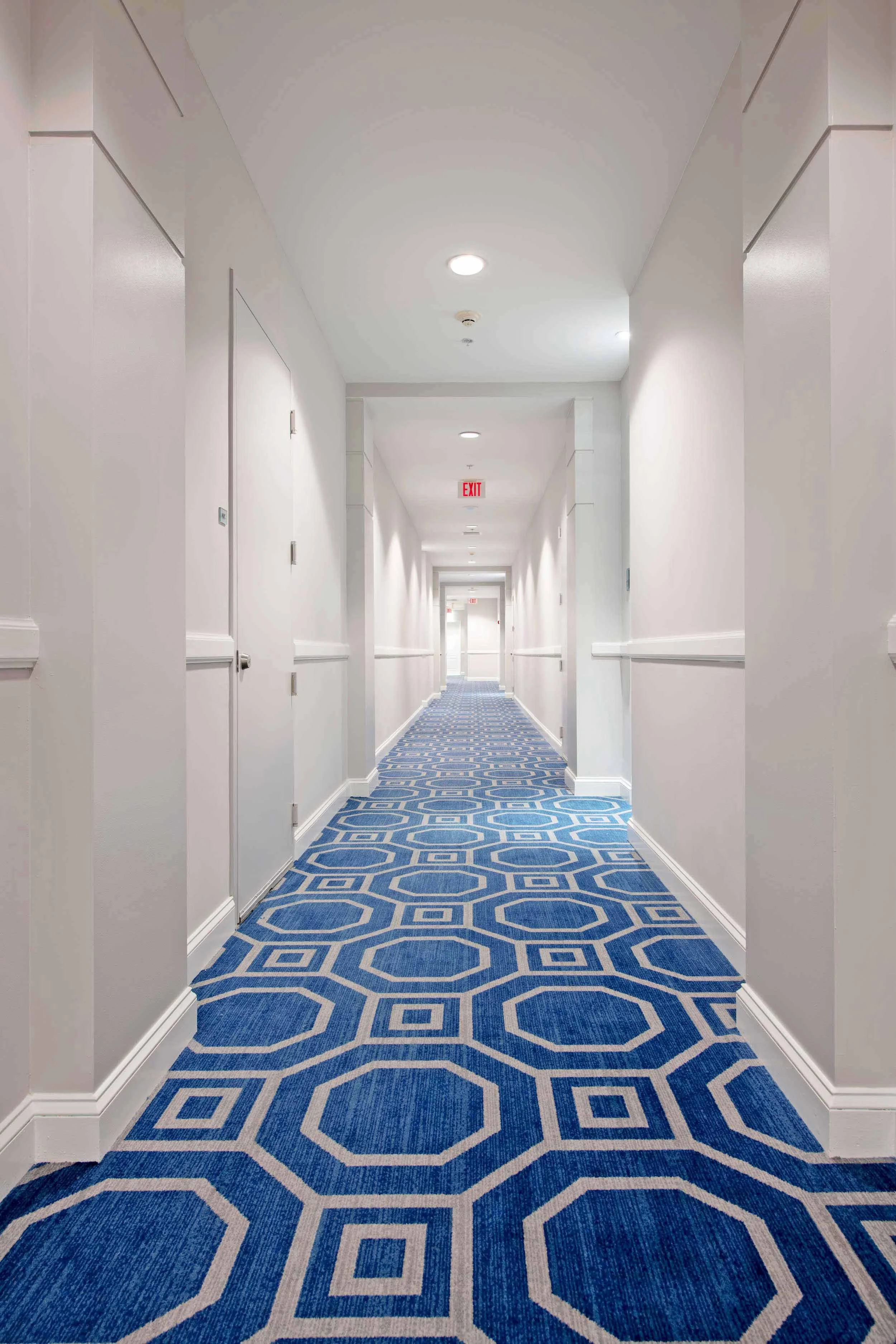
When people talk about carpet quality, they often jump straight to fiber type or pattern. Wool versus nylon. Cut pile versus loop. Bold design versus subtle texture. All of that matters, but there’s a quieter metric doing a lot of heavy lifting behind the scenes: carpet density.
In commercial and high-traffic environments, carpet density is one of the clearest indicators of how a carpet will actually perform over time. Not how it looks on day one, but how it holds up after thousands of footsteps, rolling carts, chair casters, and daily cleaning.
If you’re specifying carpet for hotels, offices, country clubs, corridors, or any other busy space, understanding carpet density is essential.
What Is Carpet Density?
Carpet density refers to how closely packed the carpet fibers are within the pile. In simple terms, it measures how much yarn is packed into a given area of carpet and how tightly those fibers are standing together.
Higher density means:
Fibers are closer together
The pile resists crushing
The carpet maintains its appearance longer
Lower density means:
Fibers spread apart more easily
The carpet shows traffic patterns faster
Wear becomes visible sooner
Density is not about how tall the carpet is. A thick, plush carpet can still have low density if the fibers are loosely packed.
Why Carpet Density Matters in Commercial Spaces
In high-traffic settings, carpet doesn’t fail because the fibers disappear. It fails because the fibers lose their ability to bounce back.
Low-density carpet allows fibers to bend and stay bent. Over time, this creates matting, shading, and visible walk paths. High-density carpet supports the fibers from all sides, helping them spring back after compression.
For commercial environments, higher density generally means:
Better long-term appearance retention
Improved resistance to crushing and matting
Longer usable lifespan before replacement
More consistent performance across large areas
This is why two carpets with the same fiber content can perform very differently in the same space.
How Is Carpet Density Calculated?
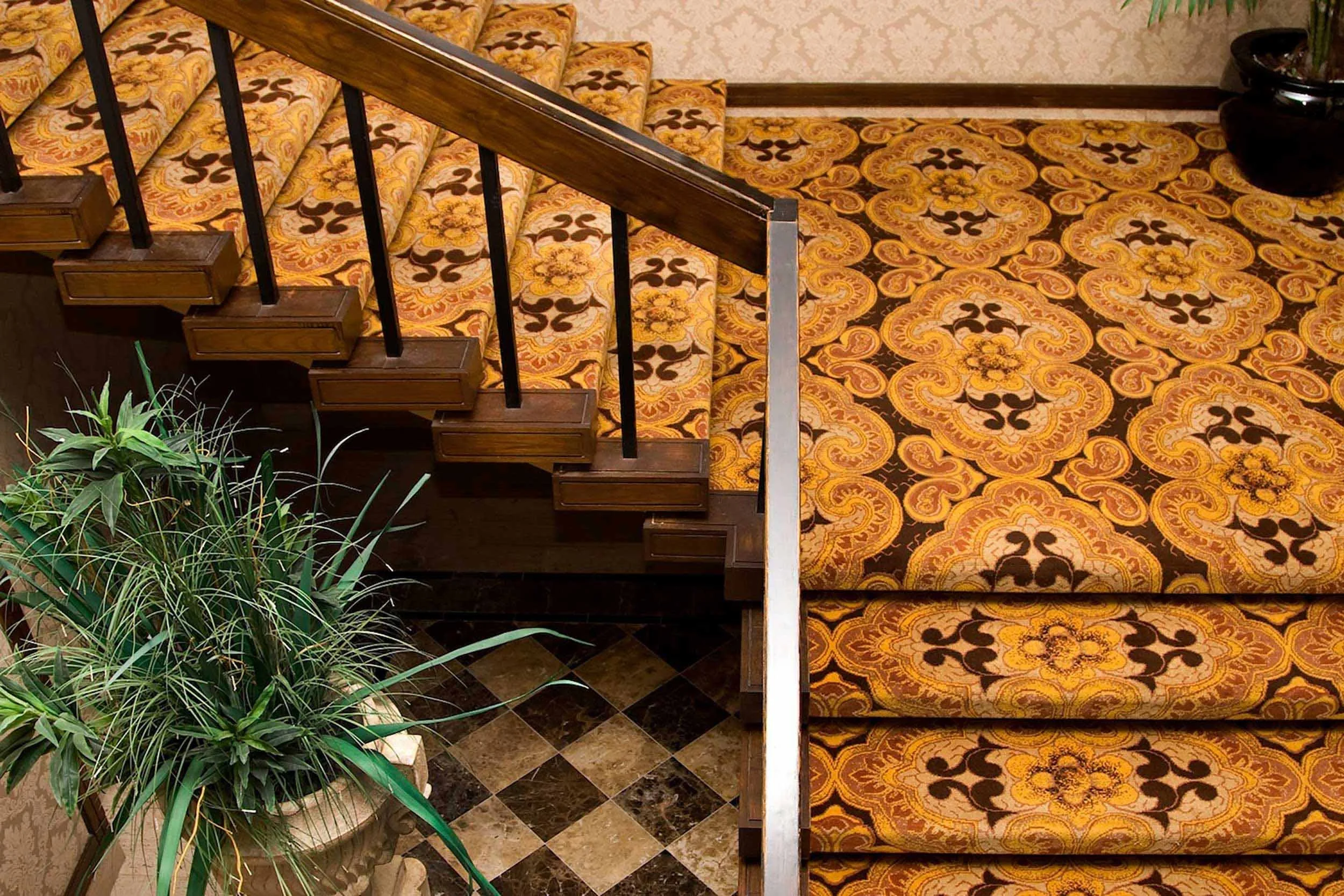
Carpet density is typically calculated using pile weight and pile height. The formula looks like this:
Density = (Pile Weight × 36) ÷ Pile Height
A carpet with a high pile weight and a shorter pile height will usually have higher density than a tall, fluffy carpet with less yarn packed into it.
Density vs Pile Weight: What’s the Difference?
Pile weight tells you how much yarn is used. Density tells you how tightly that yarn is packed.
A carpet can have a high pile weight but still be low density if the pile is tall and loose. Likewise, a carpet with a moderate pile weight can achieve excellent durability if the fibers are packed tightly.
For commercial projects, density is often the more meaningful metric, especially in corridors, lobbies, conference rooms, and guestroom entries. That’s why many commercial carpets look more tailored and structured than residential styles. Performance drives the design.
Is Higher Carpet Density Always Better?
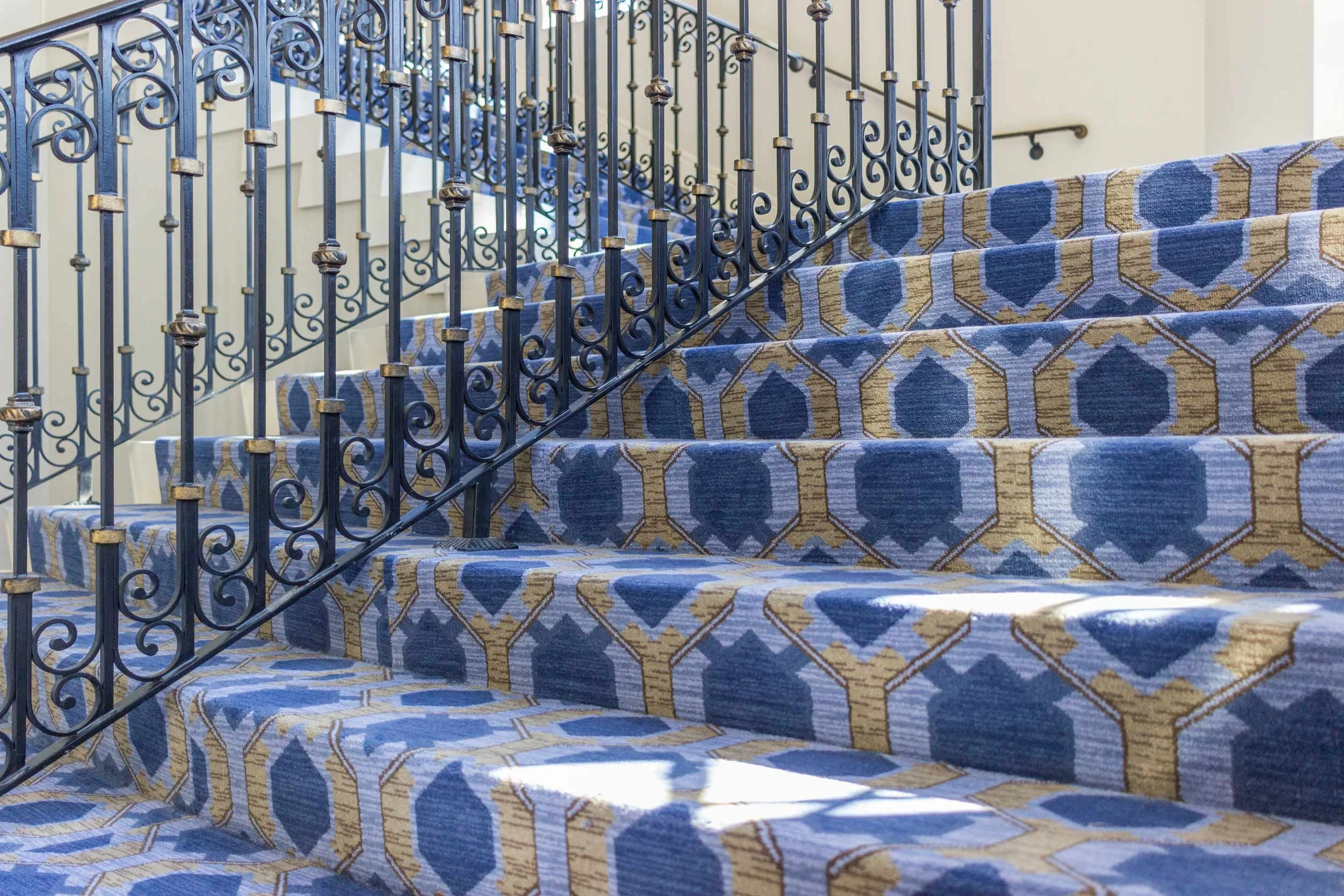
In high-traffic commercial environments, higher density is almost always preferable. It improves performance, appearance retention, and value over time.
That said, density should be balanced with the intended use of the space. A formal hotel lobby may benefit from very high density and structured pile. A lounge or private club area may allow for slightly more texture or softness, as long as density remains appropriate for traffic levels.
The goal is not maximum density at all costs. The goal is appropriate density for the environment.
How Carpet Density Affects Appearance Over Time
One of the most common questions we hear is whether carpet density affects how quickly a carpet looks worn. The answer is yes.
Higher density carpets:
Show fewer traffic lanes
Maintain a more uniform surface
Resist shading and pooling
Age more gracefully
Lower density carpets:
Show footprints and vacuum marks faster
Develop visible paths in circulation zones
Lose definition sooner
In commercial interiors, where first impressions matter every day, this difference is not subtle.
Carpet Density and Maintenance
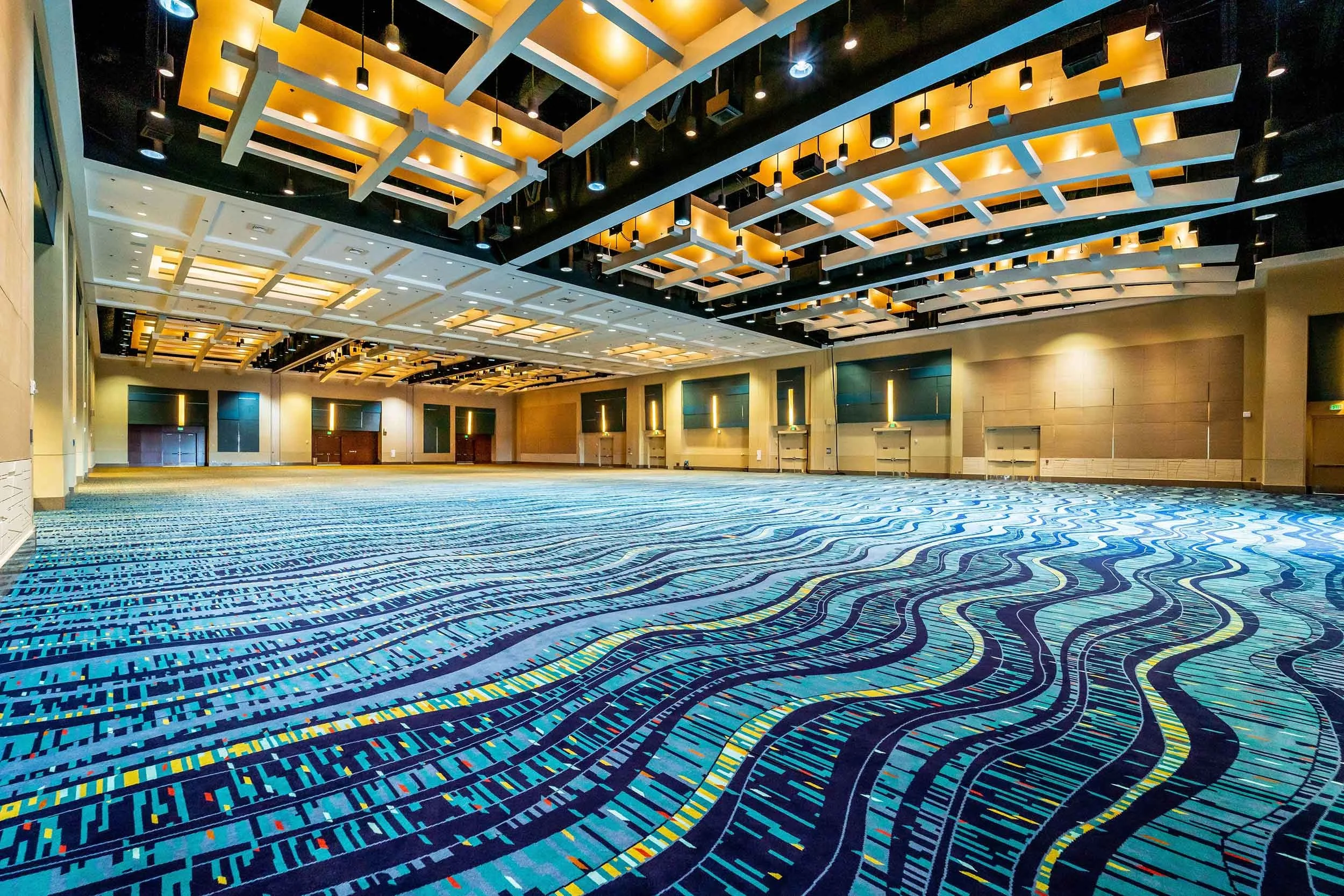
Density also plays a role in how carpet responds to cleaning.
Denser carpets tend to:
Hold fibers upright during vacuuming
Release soil more effectively
Maintain structure after repeated cleanings
This makes them particularly well suited for environments with frequent maintenance schedules, such as hotels, offices, and public spaces.
What Is a Good Carpet Density for Commercial Use?
There is no single number that fits every project, but in general, commercial carpets are specified with significantly higher density than residential products.
High-traffic areas like:
Hotel corridors
Lobbies
Office walkways
benefit from carpets designed specifically with density and performance in mind, rather than residential softness.
If density is not listed clearly in product specifications, it is worth asking for it. It is one of the most reliable predictors of long-term satisfaction.
Density Is a Performance Decision, Not Just a Technical One
Carpet density is not a buzzword or a hidden detail meant only for spec sheets. It directly affects how a carpet performs, how it ages, and how often it needs to be replaced.
In commercial and high-traffic settings, choosing the right density is a smart investment decision. It protects appearance, reduces long-term costs, and ensures that the carpet still looks intentional years after installation.
FAQs
-
Carpet density describes how tightly the fibers are packed within the carpet pile. Higher carpet density means the fibers are closer together, creating a firmer surface that resists crushing and holds its appearance longer in high-traffic environments.
-
No. Pile weight measures how much yarn is used, while carpet density measures how tightly that yarn is packed. Two carpets can have the same pile weight but very different densities depending on pile height and construction. In commercial settings, density is often the more important performance indicator.
-
High-traffic areas compress carpet fibers repeatedly. Carpet with higher density supports the fibers from all sides, helping them recover after foot traffic, rolling luggage, carts, and chair movement. Lower density carpet tends to mat down faster and show wear paths sooner.
-
In most commercial applications, yes. Higher carpet density improves appearance retention, reduces matting, and slows visible wear. This often translates to a longer usable lifespan before replacement, especially in corridors, lobbies, and common areas.
-
Not necessarily. Thick or plush carpet can still have low density if the fibers are loosely packed. In commercial spaces, a shorter pile with higher density often outperforms thicker, softer carpets when it comes to durability and long-term appearance.
-
There is no universal number, but commercial and hospitality carpets are typically designed with significantly higher density than residential products. Spaces like hotel corridors, offices, ballrooms, and country clubs benefit from carpets engineered specifically for density and performance rather than softness alone.
-
Higher density carpet tends to respond better to regular vacuuming and cleaning. The fibers stay upright, release soil more effectively, and maintain their structure after repeated maintenance cycles, which is critical in commercial environments with frequent cleaning schedules.
-
Yes. Carpet density plays a major role in how evenly a carpet wears. Higher density carpets show fewer traffic lanes, less shading, and more consistent texture over time, helping the space look intentional and well-maintained long after installation.
Final Thoughts
Understanding carpet density allows you to specify with confidence, knowing that the carpet you choose is built to handle the reality of the space, not just the rendering.
If you are evaluating carpet options for a commercial project and want guidance on density, construction, or performance expectations, those conversations early in the process make all the difference later.

Royal American Carpets designs and manufactures custom high-end carpets and rugs for hotels, clubs, residences, and beyond. Crafted to last, built to impress.
SECTORS SERVED: