Axminster Carpet Construction Explained (7-Row vs 9-Row)
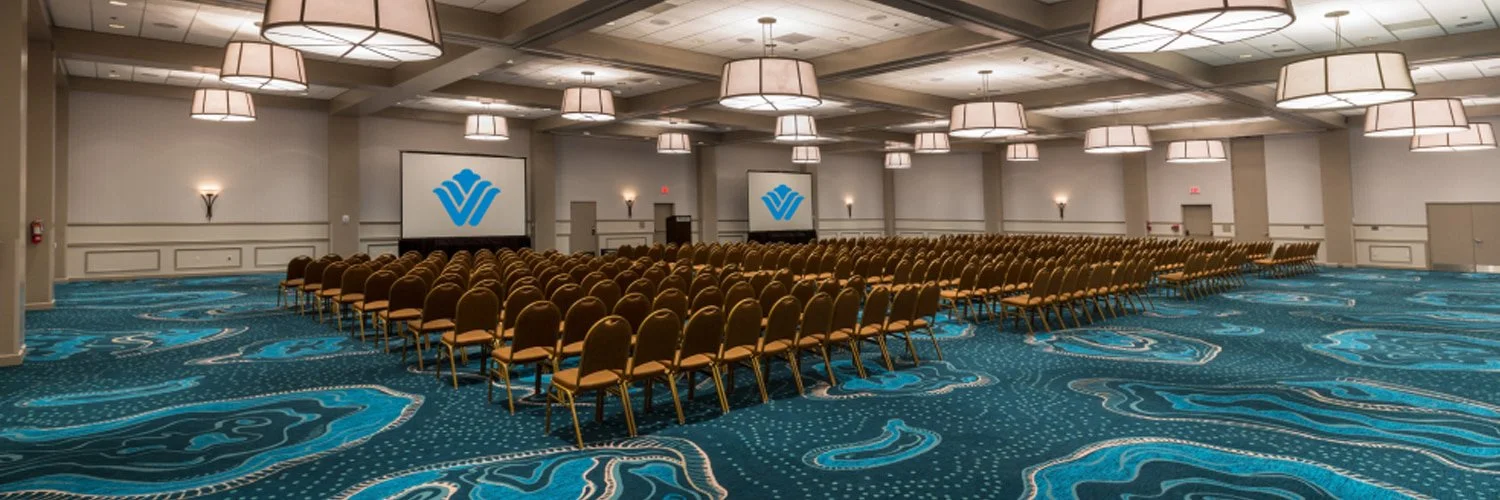
What Carpet Density Really Means in Commercial Settings
In commercial carpet, especially in hospitality environments, performance is not just about fiber or pattern. Construction plays a critical role in how a carpet holds up over time.
With woven Axminster carpet, one of the most important specifications is density, often described as “row count.” You will typically see this referenced as 7-row or 9-row construction.
At a glance, the difference may not seem obvious. In practice, it has a direct impact on durability, appearance retention, and overall performance in high-traffic environments.
Understanding Axminster Carpet Construction
Axminster carpet is woven, meaning the yarn is interlaced during production to form both the structure and the pattern. This creates a dense and stable surface designed for demanding commercial applications.
Row count refers to the number of yarn rows per inch across the width of the carpet. A higher row count means more yarn is packed into the same area, resulting in a tighter and more compact construction.
This is where the distinction between 7-row and 9-row becomes meaningful.
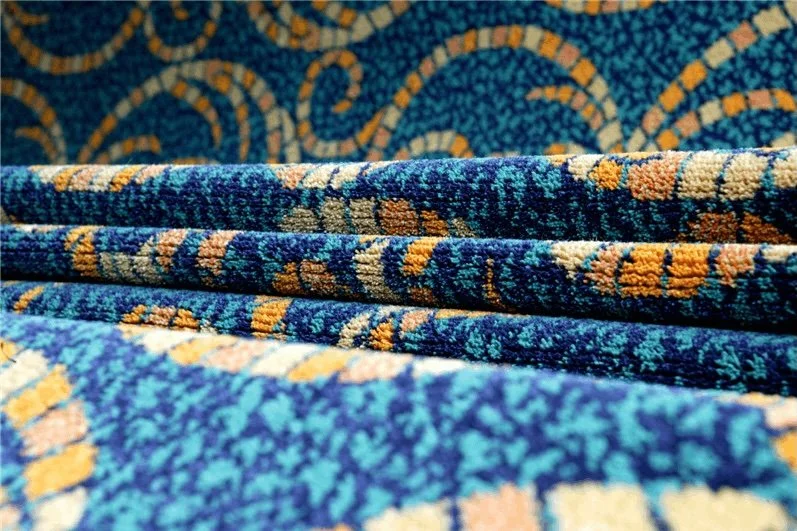
7-Row vs 9-Row Axminster Carpet: What’s the Difference
The difference between 7-row and 9-row construction comes down to density.
A 7-row Axminster carpet has fewer yarn rows per inch, resulting in a slightly more open construction. A 9-row construction increases that density, creating a tighter surface.
In real-world terms:
7-row offers a balance of durability and cost efficiency
9-row provides a denser, more robust construction designed for heavier use
This difference affects how the carpet performs under constant foot traffic and how well it maintains its appearance over time.
| Feature | 7-Row Axminster | 9-Row Axminster |
|---|---|---|
| Density | Moderate | High |
| Durability | Strong for most commercial use | Designed for heavy, continuous traffic |
| Appearance Retention | Good | Excellent over time |
| Best Use | Guestrooms, moderate-traffic areas | Corridors, ballrooms, public spaces |
| Cost | More cost-efficient | Higher upfront investment |
View Technical Specifications
For additional construction details, review the corresponding specification sheets:
7-Row Axminster Specification Sheet
9-Row Axminster Specification Sheet
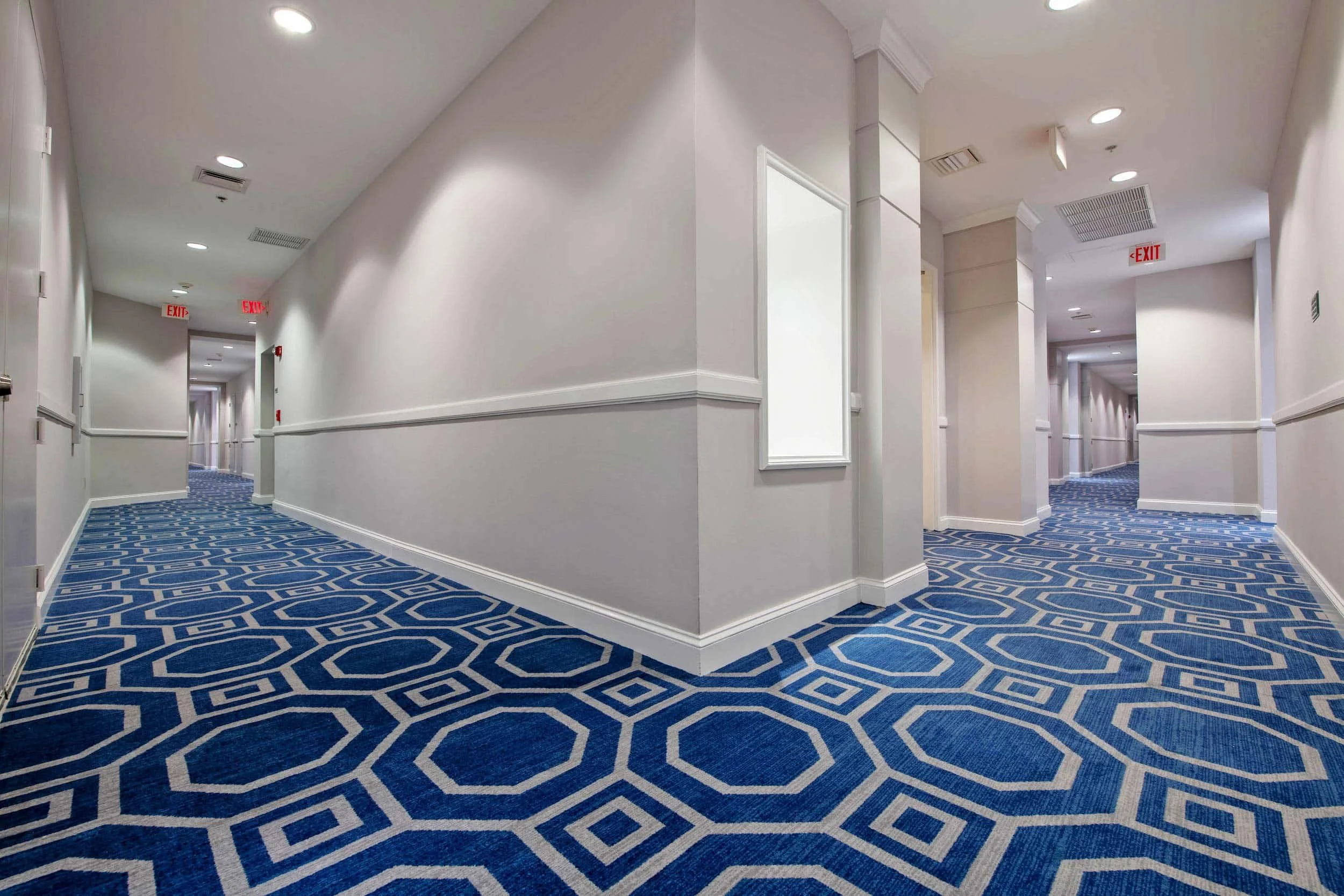
Performance in High-Traffic Commercial and Hospitality Environments
In spaces like hotel corridors, ballrooms, and public circulation areas, carpet is exposed to continuous use.
9-row Axminster is typically specified for these high-traffic hospitality environments because its higher density helps resist crushing, matting, and wear. The tighter construction supports long-term performance where traffic levels are highest.
7-row Axminster still performs well in many commercial applications, particularly in areas with moderate traffic or where budget considerations are part of the equation.
The key is aligning construction with the level of use the space will experience.
Appearance Retention Over Time
One of the advantages of woven Axminster is its ability to maintain pattern clarity. Density plays a role in how well that appearance holds up.
A 9-row construction tends to preserve its visual definition longer, especially in high-traffic areas. The added density helps the carpet maintain its structure, which keeps patterns looking consistent over time.
7-row constructions can still deliver strong visual results, but in demanding environments, they may show signs of wear slightly sooner.
When to Specify 7-Row vs 9-Row
Choosing between 7-row and 9-row is not about selecting a better or worse product. It is about selecting the right construction for the space.
9-row Axminster is commonly used in:
Ballrooms and meeting spaces
Large public areas with constant traffic
7-row Axminster is often used in:
Guestrooms or lower-traffic hospitality areas
Certain commercial environments with moderate use
Projects where cost efficiency is a priority
This approach allows designers and project teams to balance performance and budget across different areas of a property.
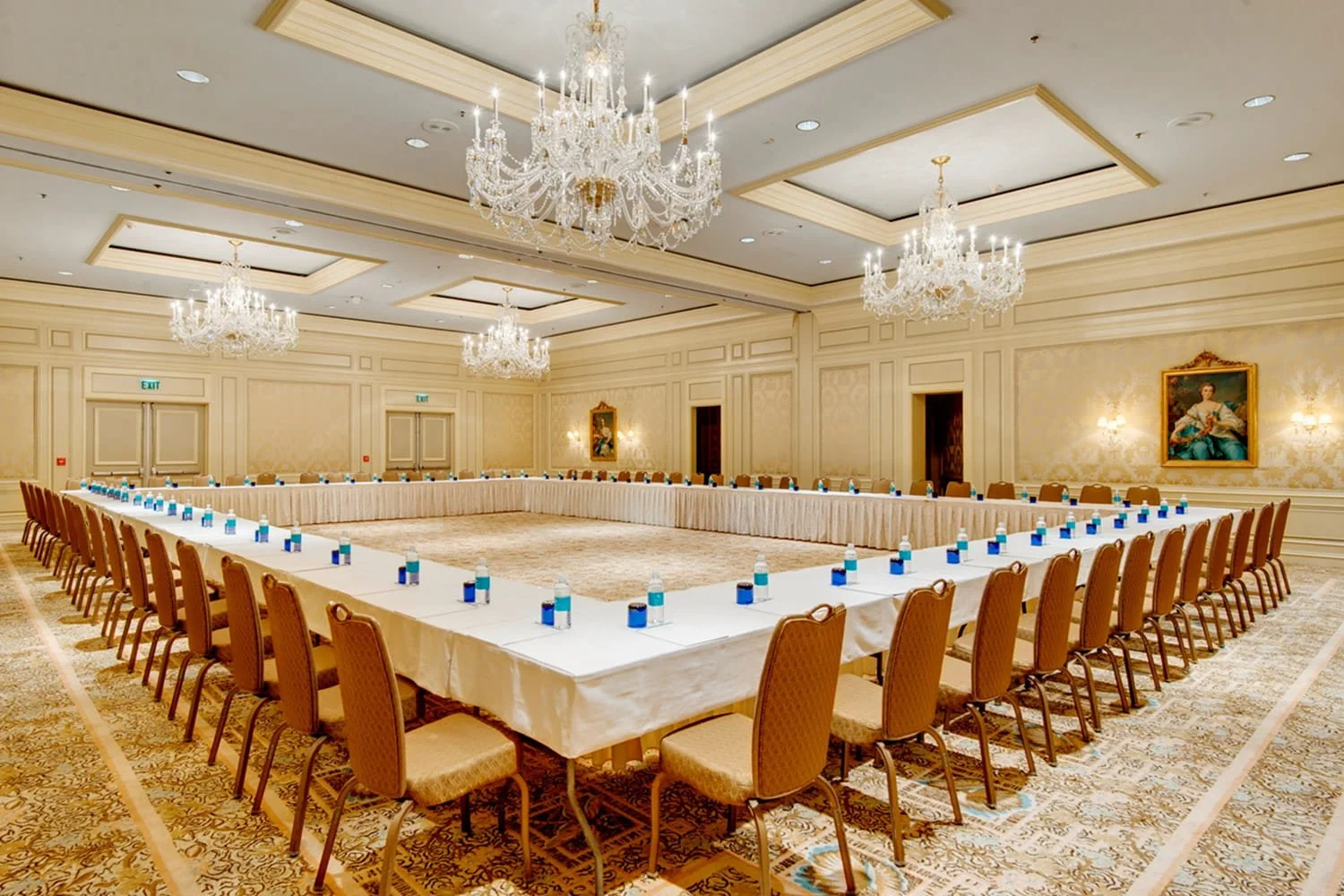
Cost Considerations and Long-Term Value
Higher density typically comes with a higher upfront cost. However, in high-traffic environments, that cost often translates into longer lifespan and more consistent appearance.
9-row Axminster can reduce the need for early replacement in heavily used areas, which can offset the initial investment over time.
7-row construction provides a practical option where traffic demands are lower or where budget constraints require a more balanced approach.
Evaluating both options through lifecycle performance helps guide the right decision.
Why Construction Matters More Than It Seems
It is easy to focus on pattern and color when selecting carpet. In commercial settings, construction often matters just as much.
Row count is not just a technical detail. It is a key factor in how a carpet performs, how long it lasts, and how well it supports the overall design intent of a space.
Understanding this allows for more informed specifications and better long-term outcomes.
FAQs
-
It refers to the number of yarn rows per inch in the carpet’s construction. A higher row count means a denser and more compact carpet structure.
-
In high-traffic environments, 9-row Axminster is generally more durable due to its increased density, which helps resist wear and maintain appearance over time.
-
Yes. 7-row Axminster is commonly used in commercial settings, particularly in areas with moderate traffic or where a balance between performance and cost is needed.
-
It is most often used in high-traffic hospitality areas such as hotel corridors, ballrooms, and large public spaces.
-
Yes. Higher density can help maintain pattern clarity and structure over time, especially in demanding environments.
Final Thoughts
Axminster carpet is known for its performance, but not all constructions perform the same.
Understanding the difference between 7-row and 9-row allows designers and project teams to make more strategic decisions based on how a space will be used.
In high-traffic hospitality environments, selecting the right construction can have a lasting impact on both performance and design integrity.

Royal American Carpets designs and manufactures custom high-end carpets and rugs for hotels, clubs, residences, and beyond. Crafted to last, built to impress.
SECTORS SERVED: